
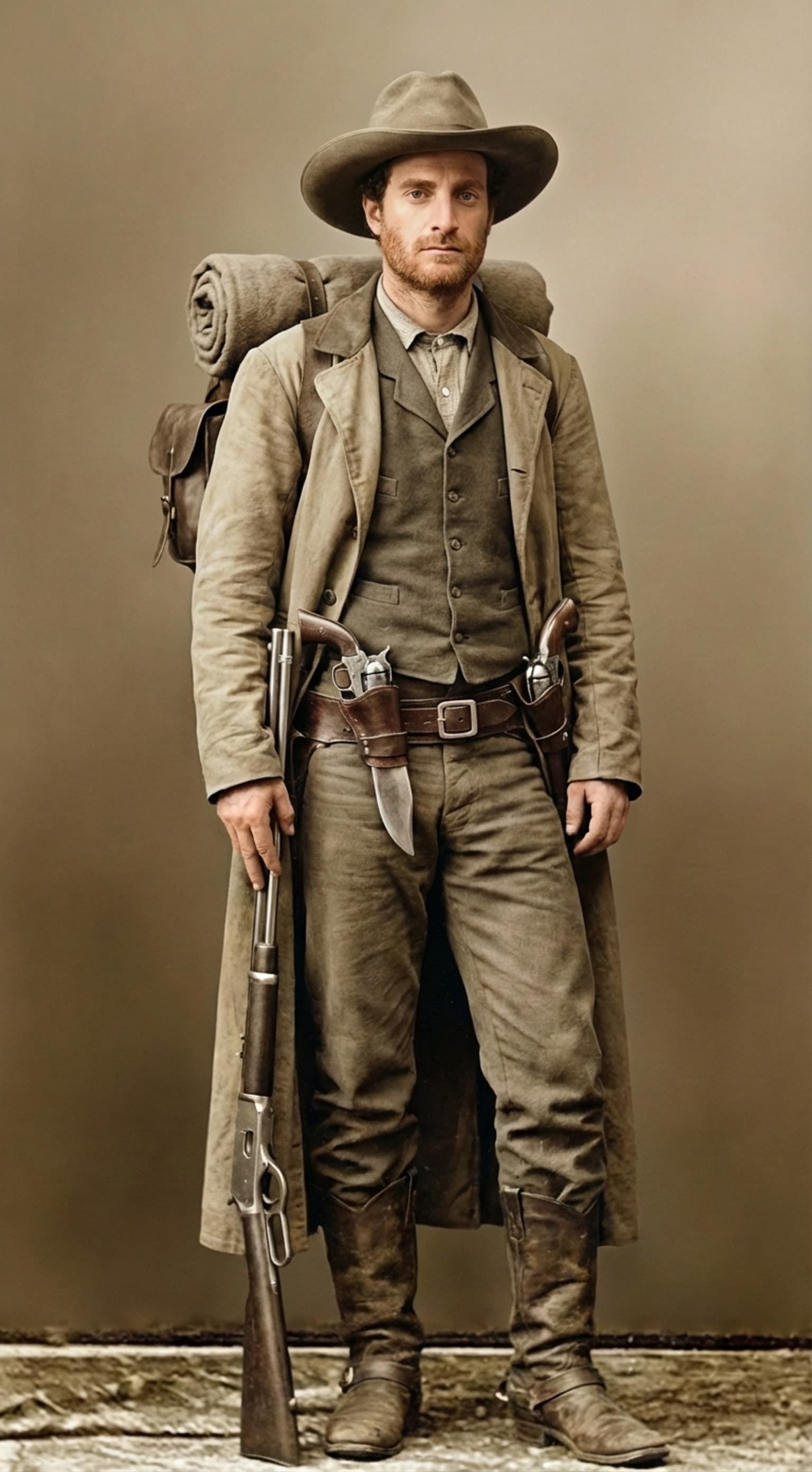
Uniform and equipment
| Uniform | Civilian clothes, badge |
|---|---|
| Dress uniform | Western wear with badge |
| Headgear | Cowboy hat |
| Equipment | Revolvers (Colt), Winchester rifle |
| Insignia and standard | Silver five-pointed star badge (wheel cut coin) |
Service record
| First appeared | 1823 |
|---|---|
| Peak strength | Varies |
| Recruited from | Frontiersmen |
| Primary tactic | Mounted Gunfight |
| Signature engagement | Mexican-American War |
| Motto or battle cry | One Riot, One Ranger |
| Obsolescence | N/A (Still Exist) |
Timeline
- 1823: Austin's Call. Stephen F. Austin employs ten men to act as rangers for the common defense against indigenous raids.
- 1835: Formal Constitution. Texas lawmakers officially create a Corps of Rangers to protect the frontier during the Texas Revolution.
- 1844: Adoption of the Colt. Following Walker's Creek, the Rangers become the first military unit to standardize the revolver.
- 1846: Mexican-American War. Rangers are federalized as scouts, gaining national fame for their effectiveness and ruthlessness.
- 1874: Frontier Battalion Formed. The Rangers are reorganized into a permanent state force to end the Indian Wars and suppress lawlessness.
Battles
Battle of Plum Creek
Following the Great Raid of 1840, Rangers and militia intercepted a massive Comanche war party. Utilizing long rifles and dust-covered grit, the Texans shattered the raiding party, recovering captives and stolen livestock in a running gunfight.
Battle of Walker's Creek
The turning point of the Indian Wars. Jack Hays and 14 Rangers, armed with new Colt Paterson revolvers, held off 80 Comanche warriors. It was the first time a mounted force could maintain sustained fire without reloading, shifting the balance of power on the frontier.
Battle of Monterrey
Serving as scouts for the US Army, the Rangers excelled in brutal urban combat. Their irregular tactics and proficiency with revolvers allowed them to clear house-to-house defenses, earning them a fearsome reputation among Mexican forces.
Commanders
Samuel Hamilton Walker
A fearless captain whose collaboration with Samuel Colt produced the massive Walker Colt revolver. Walker's input gave the Rangers the firepower needed to match the Comanche on the plains. He fell leading a charge into Huamantla during the Mexican-American War.
John "Rip" Ford
A doctor, lawyer, and newspaperman turned hardened warrior. Earning his nickname from signing casualty reports with "Rest in Peace," Ford commanded the Rangers during the turbulent 1850s, securing the Rio Grande and leading expeditions into the heart of Comancheria.
John Coffee "Jack" Hays
The quintessential Ranger Captain who revolutionized frontier warfare. Hays recognized the value of the Colt revolver, training his men to fire accurately from horseback. His leadership turned the Rangers from a ragtag militia into a feared fighting force known as "Los Diablos Tejanos."
Tactics
Mounted Revolver Charge
Rangers would close the distance rapidly on horseback, discharging dual revolvers at close range to overwhelm enemies accustomed to single-shot weapons.
Sign Cutting
Expert tracking techniques learned from indigenous adversaries, allowing Rangers to follow trails invisible to regular soldiers.
Endurance Pursuit
Traveling light with minimal supplies to outlast and run down raiding parties over hundreds of miles of inhospitable terrain.