
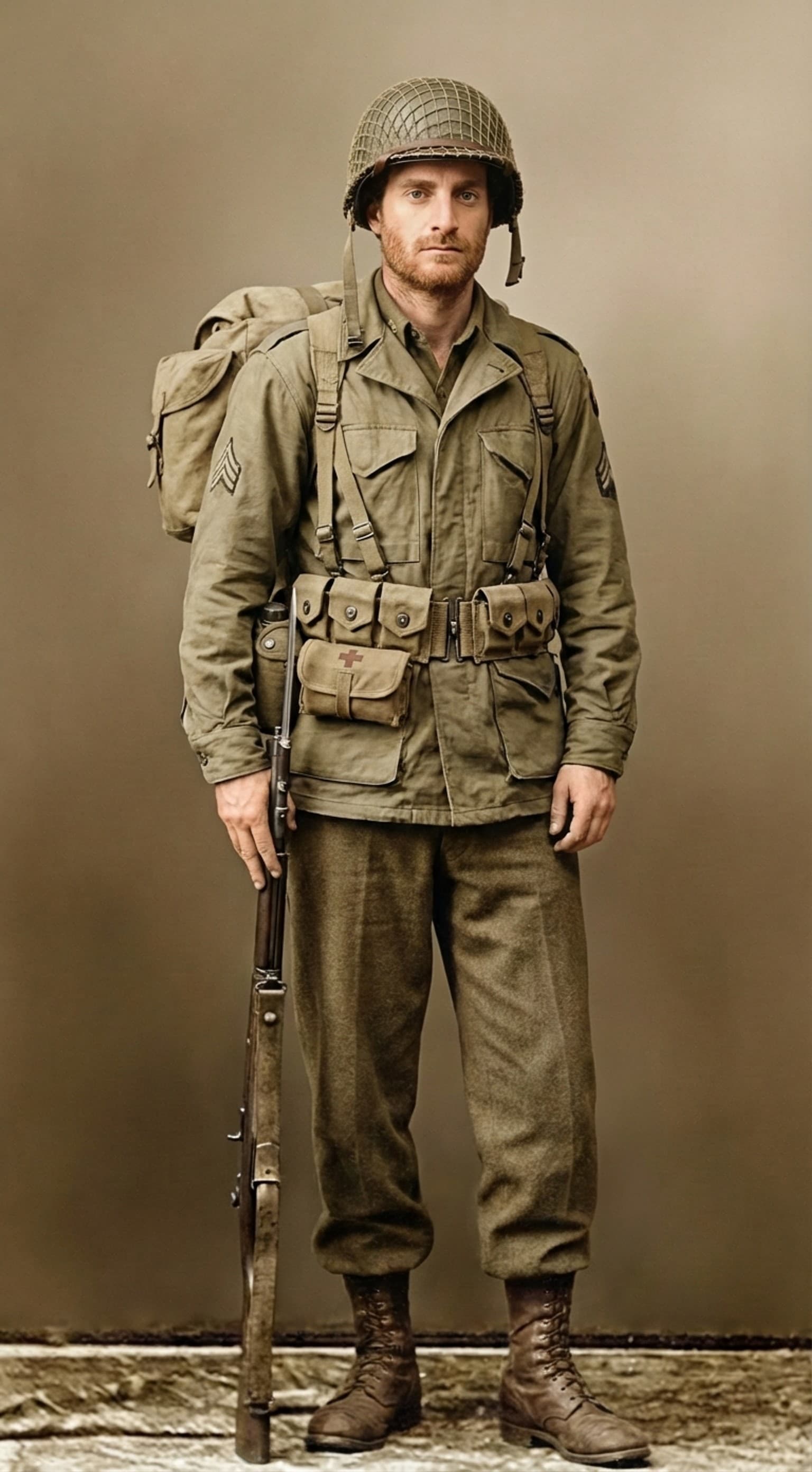
Uniform and equipment
| Uniform | Olive Drab M41 jacket, leggings |
|---|---|
| Dress uniform | Class A with diamond Ranger patch |
| Headgear | M1 Helmet with orange diamond (on back) |
| Equipment | M1 Garand, Thompson SMG, bangalore torpedoes |
| Insignia and standard | Ranger Lozenge diamond patch |
Service record
| First appeared | 1942 |
|---|---|
| Peak strength | 6 Battalions |
| Recruited from | Volunteers |
| Primary tactic | Amphibious Assault / Cliff Scaling |
| Signature engagement | Pointe du Hoc (1944) |
| Motto or battle cry | Rangers Lead The Way! |
| Obsolescence | Disbanded post-war / Reconstituted |
Timeline
- 1942: Activation. Major William Darby organizes the 1st Ranger Battalion in Carrickfergus, Northern Ireland, selecting volunteers for 'commando' training.
- 1942: Operation Torch. Rangers see their first major combat, spearheading the invasion of North Africa with amphibious landings at Arzew.
- 1943: Expansion. Following successes in Tunisia and Sicily, the force expands to include the 2nd, 3rd, 4th, and 5th Battalions.
- 1944: Disaster at Cisterna. The Ranger Force in Italy is effectively destroyed during a failed infiltration, leading to the disbandment of the 1st, 3rd, and 4th Battalions.
- 1944: D-Day Assaults. The 2nd and 5th Battalions storm Omaha Beach and Pointe du Hoc, suffering 50% casualties but securing the beachhead flanks.
- 1945: Deactivation. Following the end of hostilities in Europe and the Pacific, the Ranger battalions are deactivated, though their lineage survives.
Battles
Battle of El Guettar
In a daring night raid, the 1st Ranger Battalion infiltrated Italian lines, scaling jagged terrain to bayonet the defenders of the Djebel el Ank pass, opening the way for Patton's armor.
Pointe du Hoc
The Rangers' defining hour. Under withering machine-gun fire, they scaled 100-foot wet cliffs using ropes and ladders to neutralize German coastal batteries threatening the invasion fleet.
Battle of Cisterna
A tragic catastrophe where the 1st and 3rd Battalions were encircled by German Panzers near Anzio. Outgunned and trapped in open fields, they fought until they ran out of ammunition. Of 767 men, only 6 returned to friendly lines.
Raid at Cabanatuan
The 6th Ranger Battalion executed a flawless infiltration 30 miles behind enemy lines, rescuing over 500 POWs from a Japanese camp in one of the most successful rescue missions in US military history.
Commanders
William O. Darby
The charismatic father of the modern Rangers. He organized the 1st Ranger Battalion in Northern Ireland, modeling them after British Commandos. A leader who led from the front, he forged the Rangers' aggressive spirit in the fires of North Africa and Italy before dying in action in 1945.
James Earl Rudder
A rugged Texan who commanded the 2nd Ranger Battalion during the impossible assault on Pointe du Hoc. Despite being wounded, he established a command post on the cliff edge, holding the line against relentless German counterattacks for two days until relief arrived.
Tactics
Amphibious Raiding
Launching surprise attacks from the sea using landing craft, intended to seize ports or disable coastal defenses before the main force arrives.
Cliff Assault
The specialized use of rocket-grapnels and extension ladders to vertically flank enemies who believe the terrain is impassable.
Infiltration
Moving small units through enemy lines under cover of darkness to attack command posts, artillery, and supply lines from the rear.
Fire and Maneuver
Aggressive infantry movement where one element suppresses the enemy with heavy volume of fire while another closes in for the kill.