
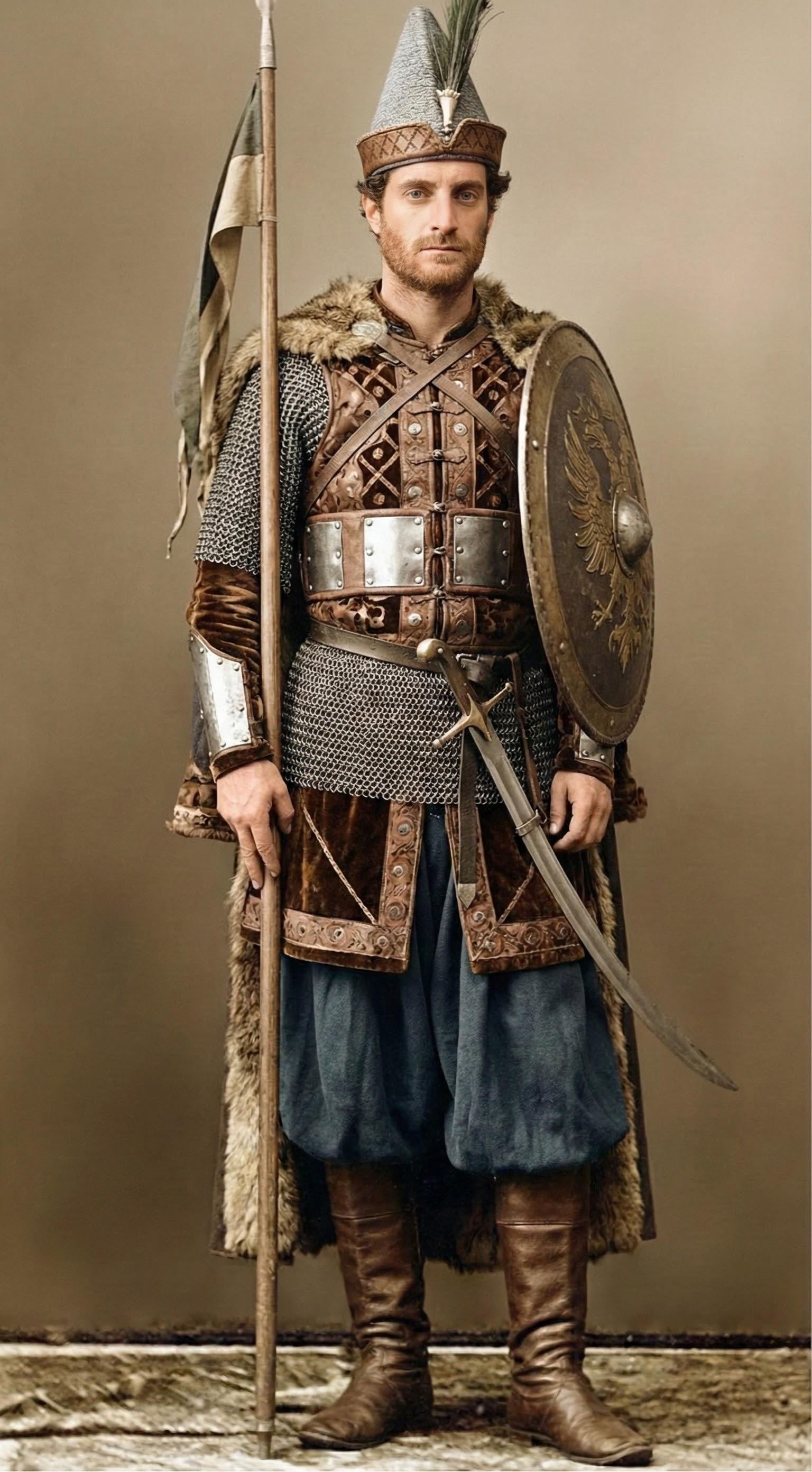
Uniform and equipment
| Uniform | Colorful Balkan dress, silk shirts, furred caps |
|---|---|
| Dress uniform | Silk and velvet, gold trim |
| Headgear | Fur-trimmed cap or turban |
| Equipment | Light lance, mace, composite bow |
| Insignia and standard | Winged Lion of St. Mark banner |
Service record
| First appeared | 1470s |
|---|---|
| Peak strength | 10,000 men |
| Recruited from | Balkan Refugees / Albanians |
| Primary tactic | Hit-and-Run / Ambush |
| Signature engagement | Battle of Fornovo (1495) |
| Motto or battle cry | San Marco! (Saint Mark!) |
| Obsolescence | Development of Light Cavalry (Hussars) |
Timeline
- 1479: Venetian Recruitment. Following the peace treaty with the Ottomans, large numbers of Albanian and Greek fighters enter Venetian service.
- 1495: Battle of Fornovo. The Stradioti gain international infamy for their brutality and speed against the French.
- 1509: War of the League of Cambrai. Peak operational usage by Venice to defend the Terraferma against a European coalition.
- 1540: Export to England. Units of Stradioti are hired by Henry VIII for service in Scotland and France.
- 1600: Decline and Assimilation. The distinction between Stradioti and other light cavalry (Cappelletti) blurs; heavy armor becomes obsolete, normalizing light cavalry roles.
Battles
Battle of Fornovo
The Stradioti's debut on the great stage. While they successfully ravaged the French baggage train, their distraction with looting allowed Charles VIII to escape. However, their savagery permanently altered the psychological landscape of the Italian Wars.
Siege of Padua
During the imperial siege, Stradioti units conducted relentless night raids and sorties, cutting supply lines and terrorizing German landsknechts, proving that light cavalry could be decisive even in siege warfare.
Battle of Agnadello
In one of Venice's darkest hours, the Stradioti fought desperately against the League of Cambrai. Despite the crushing defeat of the main Venetian army, the light cavalry's screening actions prevented total annihilation of the retreating forces.
Commanders
Theodore Paleologus
Bearing the name of Byzantium's last dynasty, Theodore led his light horsemen with the dignity of an exile prince. He was a key asset to the Venetian Republic, instrumental in organizing the unruly Balkan refugees into a cohesive fighting force.
Krokodeilos Kladas
A rebel warlord from the Morea who refused to bow to the Ottoman yoke. He transitioned from a guerrilla fighter in the Greek mountains to a mercenary captain, bringing the brutal efficiency of Balkan mountain warfare to the plains of Italy.
Mercurio Bua
A whirlwind of Albanian fury and tactical genius, Bua served Venice, France, and the Holy Roman Empire. Known for his wild bravery and shifting allegiances, he commanded Stradioti with a ferocity that terrified the heavy chivalry of Europe.
Tactics
Feigned Retreat
A classic steppe maneuver: pretending to flee in panic to draw heavy cavalry out of formation, then wheeling around to counter-attack.
Headhunting
Psychological warfare driven by economics; Stradioti were paid a ducat per enemy head, striking terror into opponents accustomed to ransom culture.
Swarm Skirmishing
Avoiding direct charges, they swarmed the enemy flanks, hurling javelins and firing arrows before closing in with maces.