
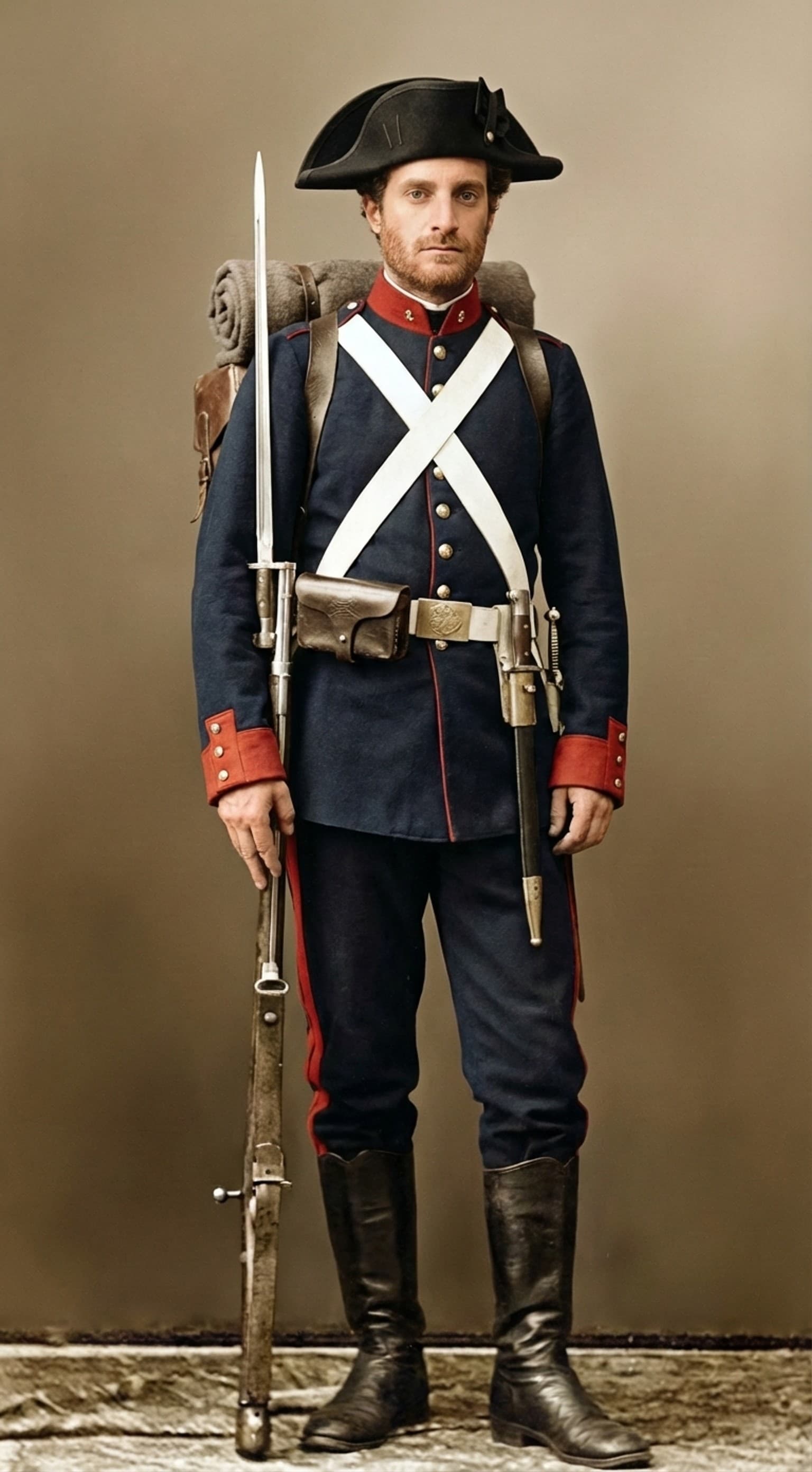
Uniform and equipment
| Uniform | Dark green or blue tunic, matching trousers, black leather equipment |
|---|---|
| Dress uniform | Dark tunic with high collar, polished leather belt, ceremonial sash |
| Headgear | Distinctive patent-leather tricorn hat (tricorne) for full dress |
| Equipment | Carbine or rifle, sidearm, sabre for mounted patrols |
| Insignia and standard | Sword crossed with fasces badge |
Service record
| First appeared | 1844 |
|---|---|
| Peak strength | 40,000+ men |
| Recruited from | Veterans / Rural Police |
| Primary tactic | Rural Patrol / Anti-Banditry |
| Signature engagement | Spanish Civil War (Mixed sides) |
| Motto or battle cry | El honor es mi divisa (Honor is my badge) |
| Obsolescence | N/A (Active) |
Timeline
- 1844: Foundation. Created by Royal Decree under the Duke of Ahumada to combat banditry resulting from the Napoleonic Wars.
- 1845: Publication of the Cartilla. The moral regulations are approved, establishing the strict code of conduct that defines the Corps.
- 1929: Benemérita Title. Officially granted the title 'Benemérita' (The Well-Deserving) for their charitable work and public service.
- 1936: Spanish Civil War Split. The Corps fractures, with members fighting on both sides, though the institution retains its structure.
- 1940: Absorption of Carabineros. The Corps takes over border patrol and fiscal duties, significantly expanding its size and mission.
- 1959: Traffic Grouping. Modernization begins with the creation of the Agrupación de Tráfico to patrol Spain's growing road network.
Battles
Siege of the Alcázar of Toledo
Guardia Civil units formed the backbone of the Nationalist defense. Under siege for two months, they utilized their marksmanship and discipline to hold the fortress against overwhelming numbers until relieved, cementing their reputation for stubborn static defense.
Siege of Santuario de la Virgen de la Cabeza
A gritty, tragic stand where Captain Cortés and a few hundred guards protected over 1,000 civilians. Starving and bombarded, they held the remote sanctuary for nearly a year. Though eventually overrun, their resistance became a mythical example of the 'Benemérita' spirit.
Operations against the Maquis
Following the invasion of the Aran Valley by anti-Franco guerrillas, the Guardia Civil engaged in a brutal, shadow war in the mountains. Through relentless patrols and intelligence networks, they dismantled the insurgency in a campaign defined by harsh terrain and ambushes.
Commanders
Santiago Cortés González
A Captain who became a legend of endurance during the Spanish Civil War. He led the defense of the Santuario de la Virgen de la Cabeza, holding out for nine months with a small garrison and civilians against massive Republican assaults, embodying the Corps' refusal to surrender.
Francisco Javier Girón y Ezpeleta
The 2nd Duke of Ahumada and founder of the Corps. A man of iron discipline and aristocratic austerity, he forged the Guardia Civil's moral code, the 'Cartilla', prioritizing honor above all else. He transformed a chaotic countryside into a state-controlled territory through sheer will.
Tactics
La Pareja (The Pair)
The fundamental operational unit. Guards always patrolled in pairs for mutual protection and witness verification. They walked at a specific distance to prevent being taken out by a single ambush, projecting a psychological image of omnipresence.
Caminos Reales Security
Systematic patrolling of royal roads and transit routes to eradicate banditry. By securing the arteries of communication, they suffocated criminal gangs who relied on highway robbery.
Casa Cuartel (Barracks Living)
Guards lived with their families in fortified barracks within the communities they policed. This ensured they were distinct from the local population (preventing corruption) but always available for immediate deployment.