
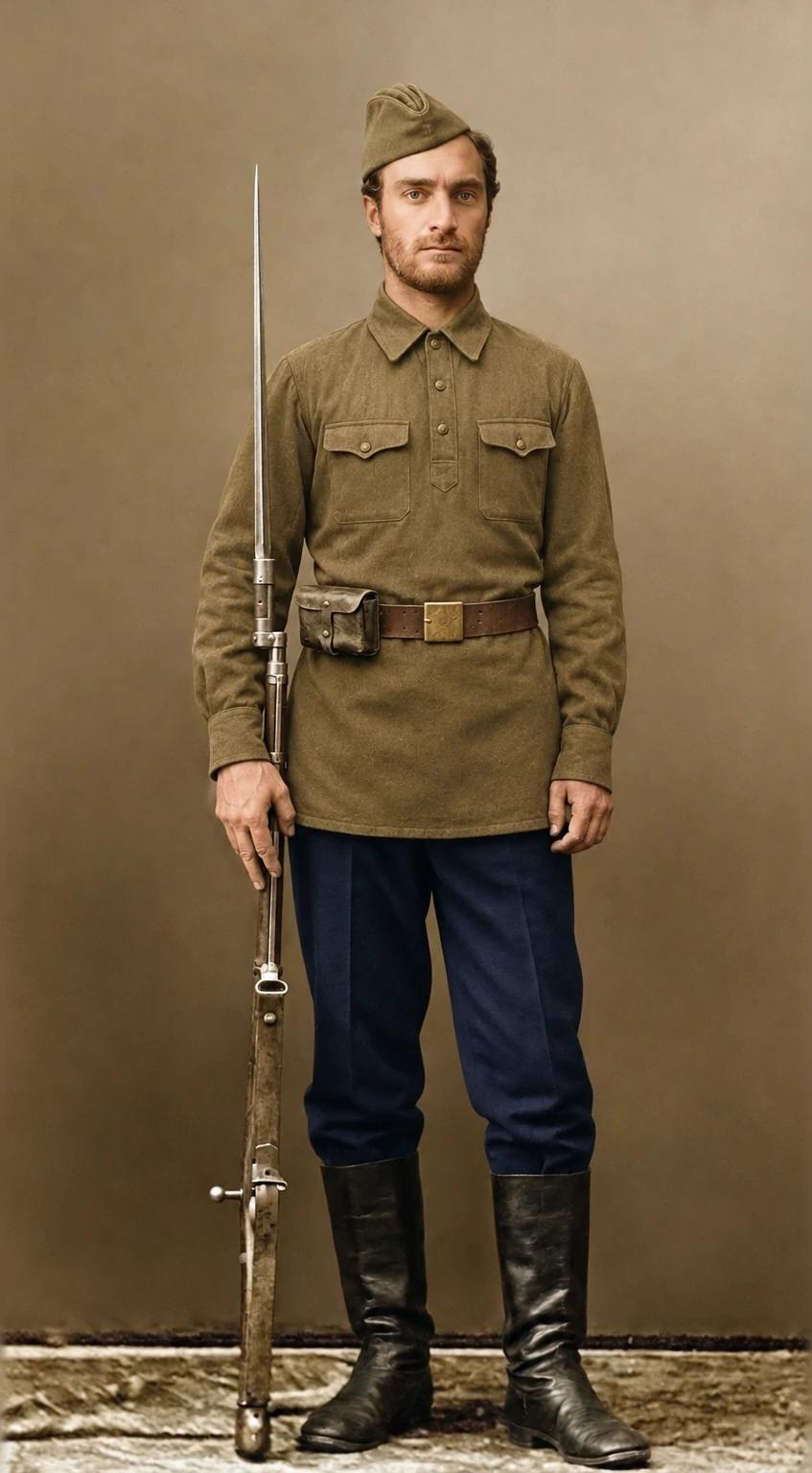
Uniform and equipment
| Uniform | Khaki gymnastyorka, dark blue breeches, high boots |
|---|---|
| Dress uniform | Dark parade tunic with high collar, Sam Browne belt, medals |
| Headgear | Pilotka side cap |
| Equipment | Rifle or submachine gun, ceremonial sword for officers |
| Insignia and standard | Kremlin Star red badge |
Service record
| First appeared | 1918 |
|---|---|
| Peak strength | ~3,000 guards |
| Recruited from | Politically Reliable Conscripts |
| Primary tactic | Elite Security / Ceremony |
| Signature engagement | Defense of Moscow (1941) |
| Motto or battle cry | Vernost', Chest', Dolg (Fidelity, Honour, Duty) |
| Obsolescence | Dissolution of USSR |
Timeline
- 1936: Formation. The Kremlin Garrison is reorganized into the Special Purpose Regiment, specifically tasked with the security of the party leadership and the citadel.
- 1941: Operation Kremlin Camouflage. Following the German invasion, the regiment executes a massive operation to paint false streets on Kremlin roofs and cover golden domes to confuse Nazi bombers.
- 1944: Combat Deployment. Sniper teams from the regiment are rotated to the active front lines to gain combat experience and eliminate high-value German targets.
- 1973: KGB Reorganization. The unit is officially renamed the Independent Red Banner Kremlin Regiment of the KGB, cementing its status as the premier political guard.
- 1991: Transition. With the dissolution of the Soviet Union, the unit transitions into the Presidential Regiment of the Russian Federation.
Battles
Defense of Moscow
As the Luftwaffe rained bombs, the Regiment manned anti-aircraft batteries on the Kremlin walls and prepared the citadel for a last-stand siege. Their discipline held the nerve of the Soviet command center.
Western Front Sniper Operations
While the main body guarded the capital, elite sniper detachments from the Regiment were deployed to the front lines, eliminating over 1,200 enemy officers and soldiers in a display of lethal precision.
Commanders
Fyodor Peterson
An early Commandant of the Kremlin who established the rigorous discipline and loyalty standards required for the Red Guards protecting the Bolshevik leadership during the chaotic Civil War era.
Nikolai Spiridonov
Commandant of the Moscow Kremlin during the darkest days of WWII. A steely NKVD Lieutenant General who orchestrated the complex camouflage of the Kremlin and managed the regiment's desperate defense preparations as the Wehrmacht approached the capital.
Tactics
Post No. 1 Vigil
A psychological and physical feat requiring soldiers to stand perfectly motionless for hours at the Mausoleum, projecting unwavering state stability.
Urban Camouflage
The strategic masking of architectural landmarks using paint, plywood, and nets to alter the aerial silhouette of the fortress city against bombing raids.
Close Protection Circles
A layered security doctrine involving uniformed guards and plainclothes agents to create an impenetrable buffer around Soviet leaders.
Sniper Interdiction
The deployment of highly trained marksmen to suppress enemy movement and eliminate command elements, a skill honed by the regiment's elite shooters.