
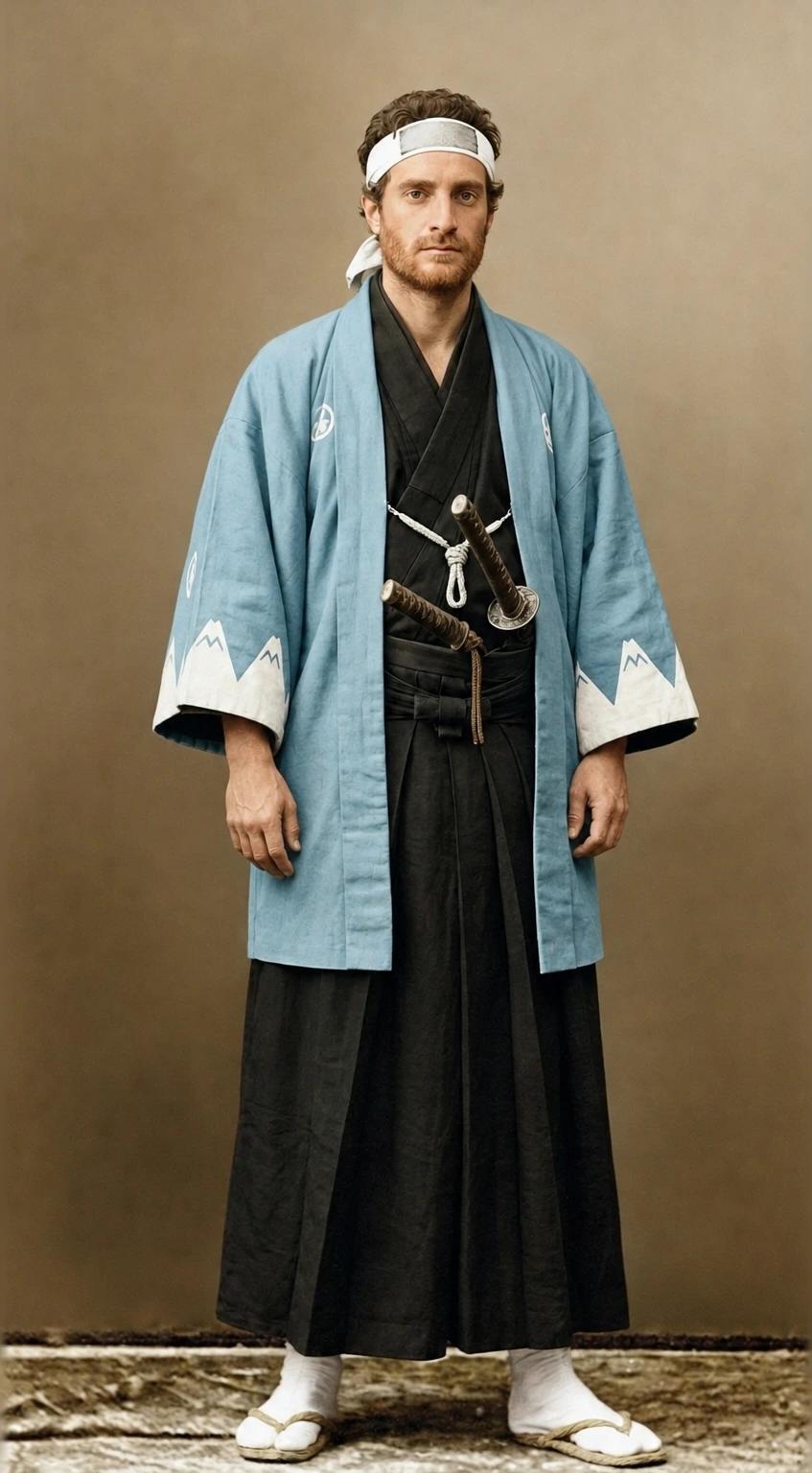
Uniform and equipment
| Uniform | Light blue haori over dark kimono with white sleeve triangles |
|---|---|
| Dress uniform | Same haori with additional cords, badges, and white tabi |
| Headgear | Usually bareheaded or simple headband |
| Equipment | Katana, wakizashi, occasionally pistols or spears |
| Insignia and standard | Kanji 'Makoto' on haori; jagged white hem |
Service record
| First appeared | 1863 |
|---|---|
| Peak strength | ~300 men |
| Recruited from | Ronin / Commoners |
| Primary tactic | Urban Policing / Swordsmanship |
| Signature engagement | Ikedaya Incident (1864) |
| Motto or battle cry | Makoto (Sincerity) |
| Obsolescence | Meiji Restoration |
Timeline
- 1863: Formation at Mibu. Originally the Roshigumi, the group splits, and the Kyoto defenders form the Mibu Roshigumi, later named Shinsengumi.
- 1863: Assassination of Serizawa Kamo. Kondo and Hijikata purge the erratic original lead commander, consolidating power and enforcing strict discipline.
- 1864: The Ikedaya Raid. The unit achieves national fame by preventing the burning of Kyoto.
- 1867: Abura-no-Koji Incident. Internal conflict leads to the assassination of splinter faction leader Ito Kashitaro.
- 1868: Retreat to Edo. Following the defeat at Toba-Fushimi, the unit retreats east, re-equipping with modern firearms.
- 1869: Fall of Ezo. With Hijikata's death and the surrender of the Ezo Republic, the Shinsengumi ceases to exist.
Battles
Kinmon Incident
When rebel forces marched on the Imperial Palace, the Shinsengumi defended the gates alongside Aizu forces. They proved they were not just police, but a capable paramilitary force in open combat.
Ikedaya Incident
A midnight raid on an inn where Choshu revolutionaries plotted to burn Kyoto. In the cramped, dark corridors, the Shinsengumi engaged in a brutal melee, decapitating the rebellion's leadership and delaying the Meiji Restoration by a year.
Battle of Toba-Fushimi
The opening clash of the Boshin War. The Shinsengumi charged with swords and courage against Imperial forces armed with modern rifles and artillery. It was a slaughter that signaled the end of the samurai era.
Battle of Hakodate
The final stand of the Shogunate. Hijikata led the remaining Shinsengumi in a desperate defense of the Ezo Republic. The fall of the Goryokaku fortress marked the total dissolution of the unit.
Commanders
Kondo Isami
The stoic Commander who forged a ragtag group of ronin into the Shogun's most feared wolves. A master of Tennen Rishin-ryu, his unwavering loyalty to the Tokugawa regime led him from the bloody streets of Kyoto to the executioner's block.
Okita Soji
A sword prodigy with a cheerful demeanor that masked lethal efficiency. As Captain of the First Unit, he was the tip of the Shinsengumi's spear, cutting down foes with blinding speed until tuberculosis claimed him young.
Hijikata Toshizo
Known as the 'Demon Vice-Commander,' he enforced the unit's brutal code with iron discipline. A tactical genius and ruthless pragmatist, he modernized the Shogunate's remnants and fought until his death in a hail of bullets at Hakodate.
Tactics
Pack Hunting
Unlike traditional duelists, they fought as a unit, surrounding a single enemy with multiple swordsmen to ensure a kill.
Indoor Raiding
Specialized in fighting in narrow corridors (like inns), utilizing short thrusts and low stances to negate the length of enemy swords.
Tennen Rishin-ryu
A combat style emphasizing brute force and practicality over elegance, often using the weight of the body to drive the blade.
No Retreat
Under the Code of Conduct, turning one's back on the enemy was punishable by death, forcing members to fight with suicidal desperation.