
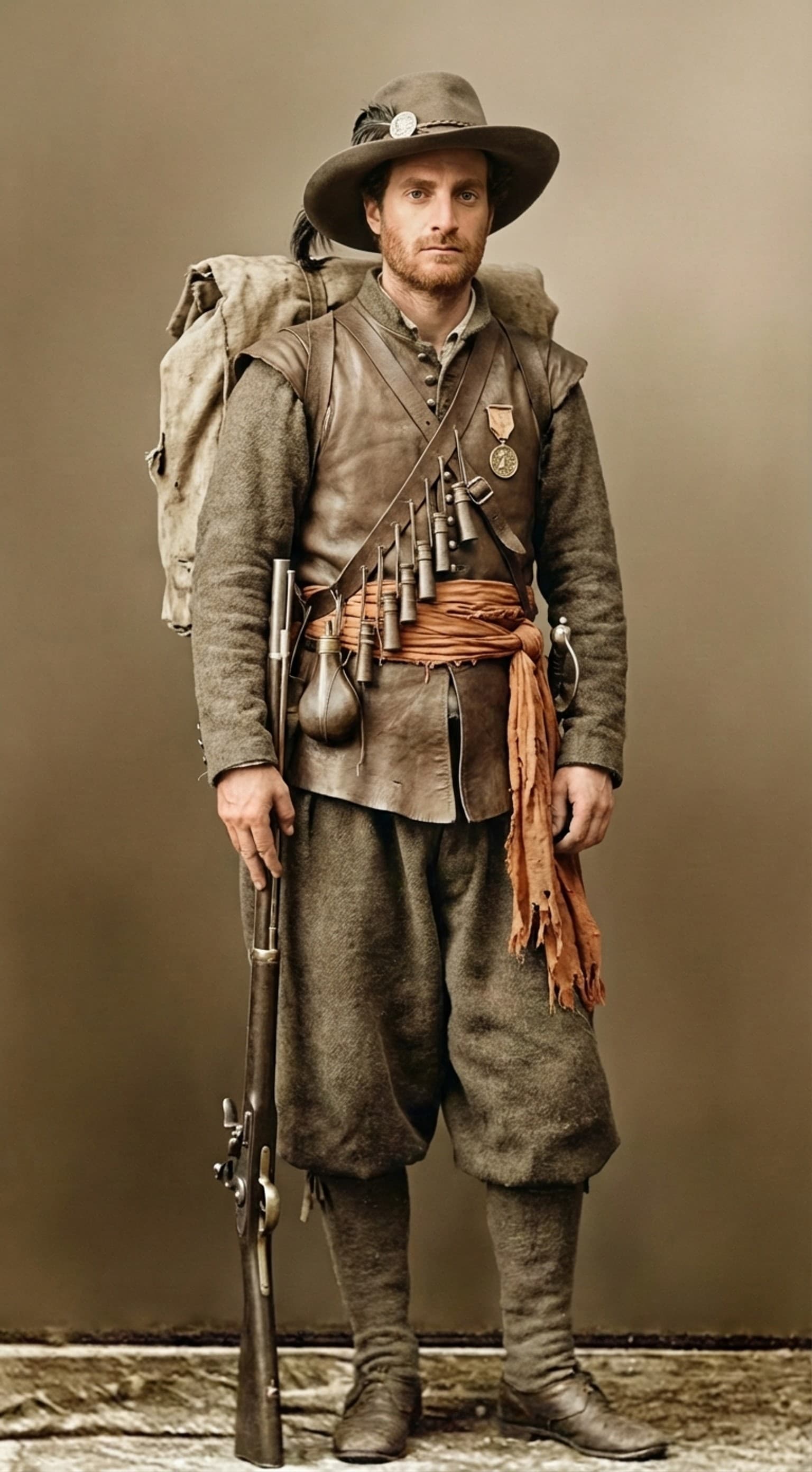
Uniform and equipment
| Uniform | Ragged sailor clothes |
|---|---|
| Dress uniform | Crescent moon badges |
| Headgear | Cap |
| Equipment | Cutlass, pistol, ship cannons |
| Insignia and standard | Half-moon medal 'Liever Turks dan Paaps' |
Service record
| First appeared | 1566 |
|---|---|
| Peak strength | Fleet |
| Recruited from | Calvinist Exiles |
| Primary tactic | Amphibious Raid |
| Signature engagement | Capture of Brielle (1572) |
| Motto or battle cry | Liever Turks dan Paaps (Rather Turkish than Popish) |
| Obsolescence | Independence of Netherlands |
Timeline
- 1566: Compromise of Nobles. Dutch nobles present a petition to Margaret of Parma; they are dismissed as 'gueux' (beggars), a name they adopt with pride.
- 1569: Letters of Marque. William of Orange issues official letters of marque, organizing the disparate pirate crews into a privateering navy.
- 1572: Expulsion from England. Queen Elizabeth I, under Spanish pressure, bars the Sea Beggars from English ports, forcing them to attack the Dutch coast.
- 1572: Capture of Brielle. The Sea Beggars seize Brielle on April 1st, establishing the first liberated territory.
- 1573: Naval Supremacy. Victories on the Zuiderzee ensure rebel control of the internal waterways.
- 1574: Relief of Leiden. The Beggars successfully utilize inundation tactics to save Leiden.
- 1576: Integration. Following the Pacification of Ghent, the irregular Sea Beggar units are gradually professionalized into the Dutch Navy.
Battles
Capture of Brielle
Expelled from English ports and starving, the Beggars sought plunder but found a weak garrison. They stormed the city, creating the first foothold for the Dutch Revolt. It proved the Spanish were not invincible and ignited a firestorm of rebellion across the Low Countries.
Battle on the Zuiderzee
A decisive naval clash where the Sea Beggars, using smaller, more maneuverable vessels in shallow waters, defeated a heavy Spanish fleet led by the Count of Bossu. The victory secured North Holland and prevented the Spanish from resupplying their armies by sea.
Relief of Leiden
In a desperate gamble, the rebels cut the dikes, flooding the countryside. The Sea Beggars sailed their flat-bottomed barges over the fields, engaging Spanish forts amidst the treetops, and relieved the starving city, cementing the legend of Dutch resilience.
Commanders
William II de la Marck
Known as the 'Lord of Lumey', he was a ferocious and unstable commander. A sworn enemy of the Spanish Inquisition, his brutal leadership galvanized the Sea Beggars into a terrifying force. He led the accidental but pivotal capture of Brielle, sparking the general revolt.
Willem Bloys van Treslong
A nobleman turned rebel, Treslong provided the tactical grounding to Lumey's rage. He commanded the fleet alongside Lumey at Brielle and was instrumental in securing the town for the Prince of Orange rather than merely looting it.
Louis de Boisot
The Admiral of Zeeland, Boisot was a more disciplined commander than the early pirate-nobles. He famously led the Beggar fleet across the flooded lands of Holland to break the Siege of Leiden, delivering bread and herring to the starving populace.
Tactics
Inundation Warfare
Strategic destruction of dikes and sluices to flood low-lying land, allowing shallow-draft Beggar ships to sail inland and bypass Spanish fortifications.
Boarding Swarm
Lacking heavy galleons, the Beggars used swarms of smaller flyboats to surround large Spanish ships, grappling them and overwhelming the crew with superior numbers in close quarters.
Coastal Raiding
Amphibious hit-and-run attacks on coastal monasteries and lightly defended towns to secure supplies and terrorize the Spanish administration.