
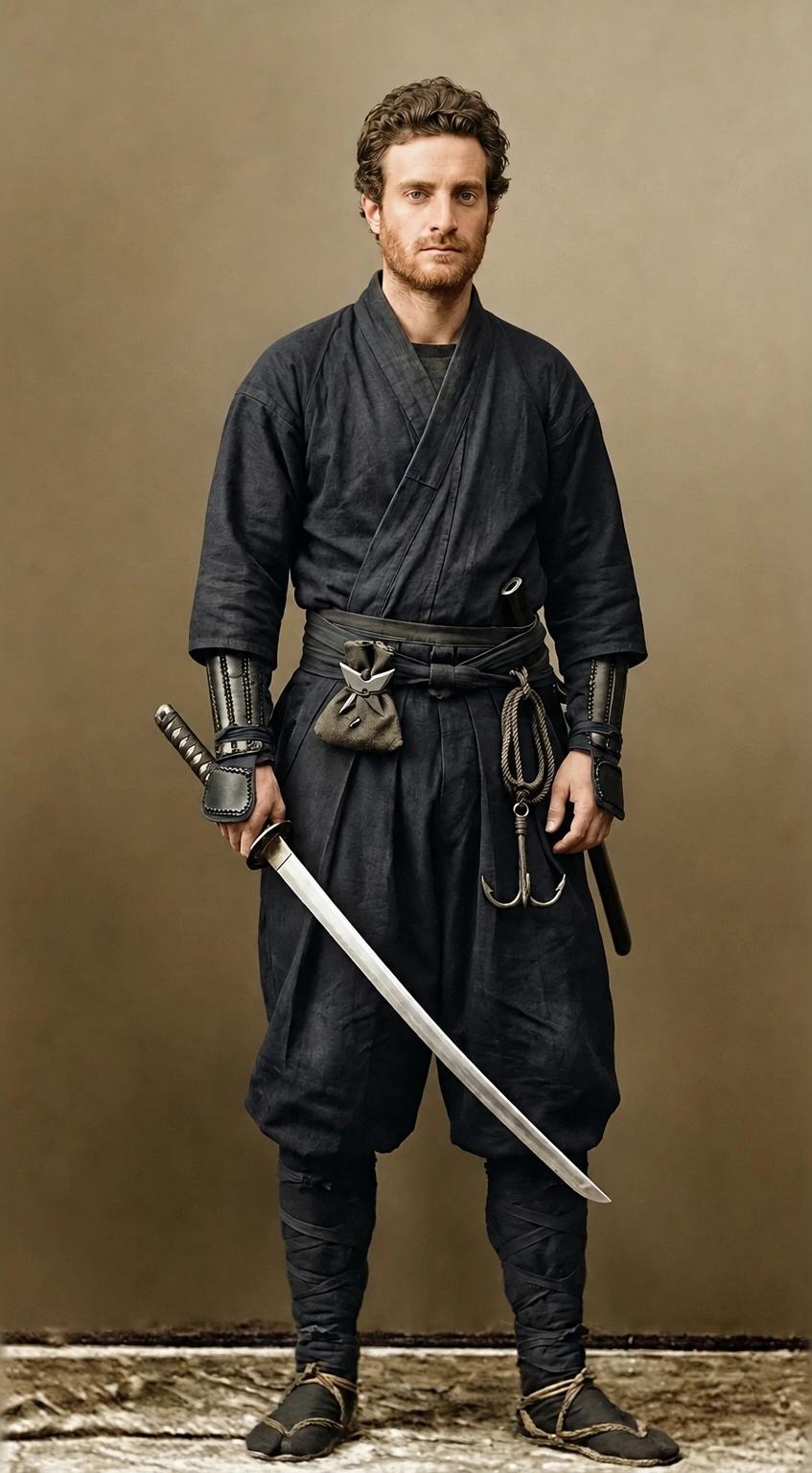
Uniform and equipment
| Uniform | Disguise as peasant/merchant (Mission specific) |
|---|---|
| Dress uniform | Dark blue/black operational wear (Stage tradition) |
| Headgear | Hood or straw hat |
| Equipment | Katana, shuriken, kusarigama, explosives |
| Insignia and standard | None; clan mon when shown |
Service record
| First appeared | 15th Century |
|---|---|
| Peak strength | Clans (Iga/Koga) |
| Recruited from | Hereditary Clans |
| Primary tactic | Infiltration / Sabotage |
| Signature engagement | Tenshō Iga War (1581) |
| Motto or battle cry | Rin Pyo Toh Sha... (Kuji-in mantra) |
| Obsolescence | Tokugawa Peace |
Timeline
- 1487: Battle of Magari. Early recorded use of Iga and Kōka warriors as stealth specialists by the Rokkaku clan, distinguishing them from standard ashigaru.
- 1560: Rise of Oda Nobunaga. Ninja activity intensifies across Japan as daimyo hire shinobi for intelligence gathering during the chaotic Sengoku period.
- 1579: First Tenshō Iga War. Iga warriors successfully repel an invasion force led by Oda Nobukatsu using superior knowledge of the terrain and night attacks.
- 1581: Destruction of Iga. Oda Nobunaga's main army decimates the Iga province; survivors flee and enter the service of Tokugawa Ieyasu.
- 1582: Divine Crossing of Iga. Hattori Hanzō escorts Tokugawa Ieyasu through the dangerous Iga mountains, securing the future Shogun's life and the ninja's place in the shogunate.
- 1638: Shimabara Rebellion. The last major military engagement involving ninja units; afterwards, they transition primarily into police and guard roles (Oniwaban).
- 1676: Bansenshukai Compiled. Fujibayashi Sabuji writes the multi-volume manual on ninja tactics, preserving the dying art of ninjutsu.
Battles
Second Tenshō Iga War
Oda Nobunaga invaded Iga with 40,000 troops against 4,000 shinobi. Despite a heroic guerrilla defense using explosives and night raids, the sheer weight of numbers crushed the independent ninja clans, forcing survivors to scatter or serve feudal lords.
Siege of Odawara
Fūma Kotarō's ninja waged a campaign of terror against Toyotomi Hideyoshi's besieging forces. Simultaneously, Hattori Hanzō's Iga units infiltrated the castle for the Tokugawa, proving that shinobi warfare remained vital even in massive siege operations.
Shimabara Rebellion
The final major deployment of shinobi. Kōka ninja were tasked with infiltrating the rebel-held Hara Castle to map defenses and steal food supplies. While their stealth was effective, they suffered heavy casualties, marking the end of the ninja as a battlefield force.
Commanders
Hattori Hanzō
Known as 'Demon Hanzō,' he was a master tactician and spearman who led the Iga ninja in service of Tokugawa Ieyasu. His most legendary feat was the 'Crossing of Iga,' where he guided the future Shogun through hostile territory following the assassination of Oda Nobunaga.
Momochi Sandayū
One of the three great Iga jōnin (high-ranking ninja). A shadowy figure who orchestrated the guerrilla defense of Iga Province against the massive armies of Oda Nobunaga, utilizing the mountainous terrain to bleed the invaders dry.
Fūma Kotarō
The fearsome leader of the Fūma clan, serving the Hōjō family. Standing tall and muscular, he specialized in disruptive warfare and piracy. His band was renowned for night raids and chaos tactics that broke the morale of the Takeda clan.
Tactics
Shinobi-iri
Stealth infiltration techniques used to breach enemy castles under the cover of darkness or rain to gather intelligence or assassinate key targets.
Hitsuke (Arson)
Strategic fire-setting to create chaos, destroy supply caches, and force an enemy army to break formation or retreat.
Hensō-jutsu
The art of disguise, utilizing seven standard personas (monk, merchant, acrobat, etc.) to travel openly through enemy territory without suspicion.
Goton-no-jutsu
Evasion tactics utilizing the five elements (earth, water, fire, wood, metal) to disappear from pursuers, such as hiding underwater or burying oneself.