
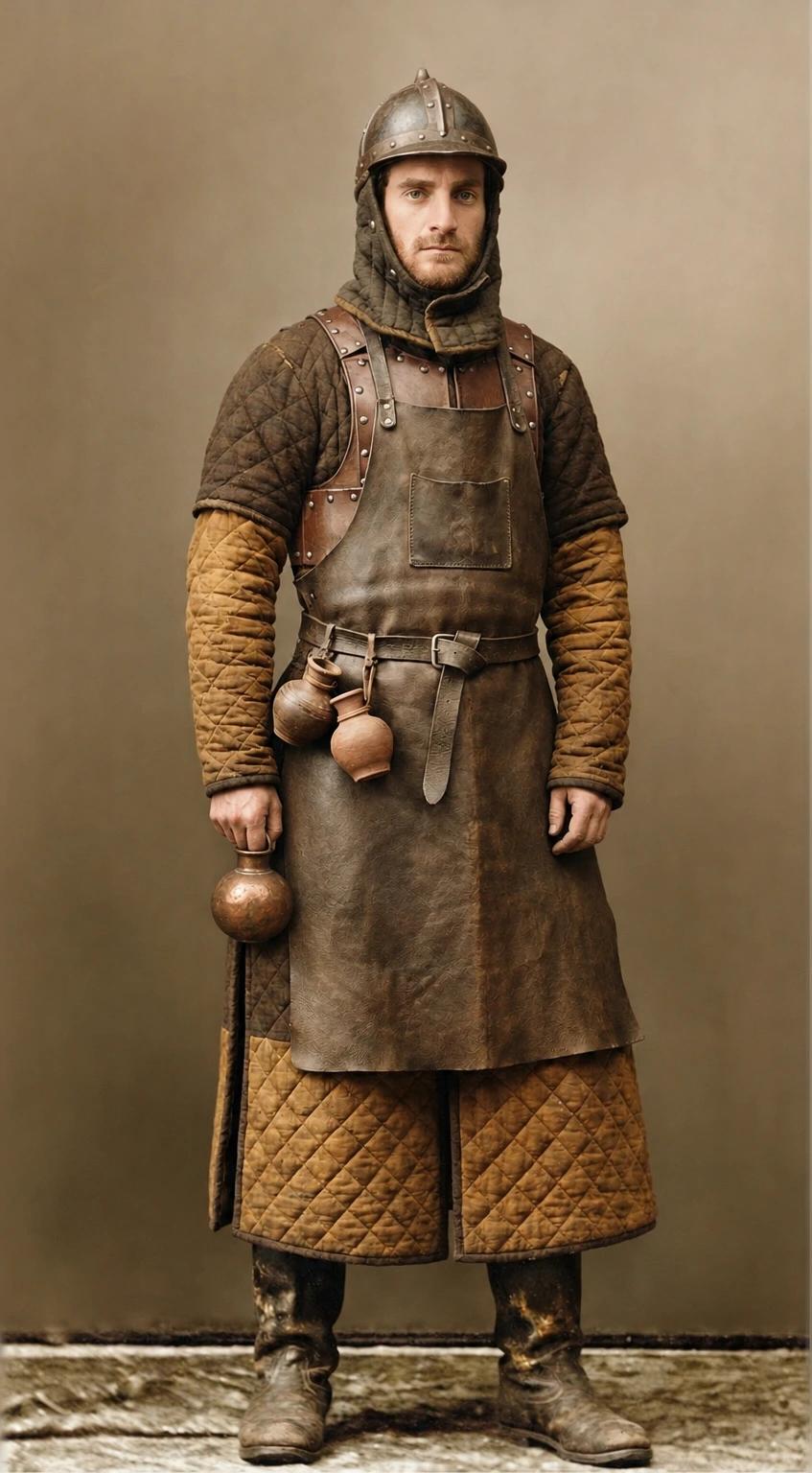
Uniform and equipment
| Uniform | Green robes, special protective leather |
|---|---|
| Dress uniform | Green silk with fire emblems |
| Headgear | Pointed cap with mail aventail |
| Equipment | Greek fire projectors, grenades, scimitar |
| Insignia and standard | None recorded |
Service record
| First appeared | 1400s |
|---|---|
| Peak strength | 2,000 men |
| Recruited from | Specialized Engineers |
| Primary tactic | Incendiary Warfare |
| Signature engagement | Siege of Rhodes (1522) |
| Motto or battle cry | Allah! (God!) |
| Obsolescence | Modern Explosives |
Timeline
- 850: Abbasid Origins. Specialized units using 'naft' (naphtha) begin appearing in Abbasid armies, wearing fire-proof clothes.
- 1191: Defense of Acre. Naffatun achieve legendary status by destroying Crusader siege engines with precision incendiary bombardments.
- 1453: Fall of Constantinople. Integration of Naffatun tactics with early gunpowder units during the final assault on the Byzantine capital.
- 1522: Rhodes Campaign. Peak operational efficiency in siege warfare, utilizing advanced mining and grenade tactics against the Knights Hospitaller.
- 1683: Battle of Vienna. By this time, the traditional Naffatun role had largely been absorbed by the Humbaracı (bombardier) corps and modern artillery.
Battles
Siege of Acre
Though the city eventually fell, the Naffatun inflicted horrific casualties. They deployed pots of burning naphtha against King Philip II's siege engines, incinerating the massive 'Evil Neighbor' catapult and creating a wall of unquenchable fire that stalled the Crusader advance for months.
Siege of Constantinople
While the Great Bombards broke the walls, Naffatun troops were instrumental in the final assaults, hurling ceramic grenades to clear the ramparts of defenders and creating smoke screens that masked the Janissary advance.
Siege of Rhodes
A brutal test of endurance against the Knights Hospitaller. Ottoman Naffatun and sappers undermined the massive walls, using incendiaries to clear breaches and repel counter-attacks in the claustrophobic tunnels, ultimately forcing the Knights' surrender.
Commanders
Salah ad-Din (Saladin)
The Sultan of Egypt and Syria who masterfully integrated Naffatun units into his siege defense. At the Siege of Acre, his pyrotechnicians turned Crusader siege towers into towering infernos, proving that fire was as vital as steel in the defense of the Levant.
Suleiman the Magnificent
Under his reign, the Ottoman war machine perfected the art of the siege. He utilized specialized incendiary sappers and grenadiers to crack the fortresses of Rhodes and Belgrade, blending traditional naphtha tactics with emerging gunpowder technologies.
Tactics
Liquid Projection
Using siphons to spray ignited naphtha into enemy fortifications or onto siege towers, creating fires that water could not extinguish.
Breach Clearing
Following the detonation of a mine, Naffatun would rush the breach, throwing grenades to incinerate defenders before they could reform a shield wall.
Counter-Mining
Entering subterranean tunnels dug by the enemy and flooding them with toxic smoke and fire to suffocate or burn the hostile sappers.