
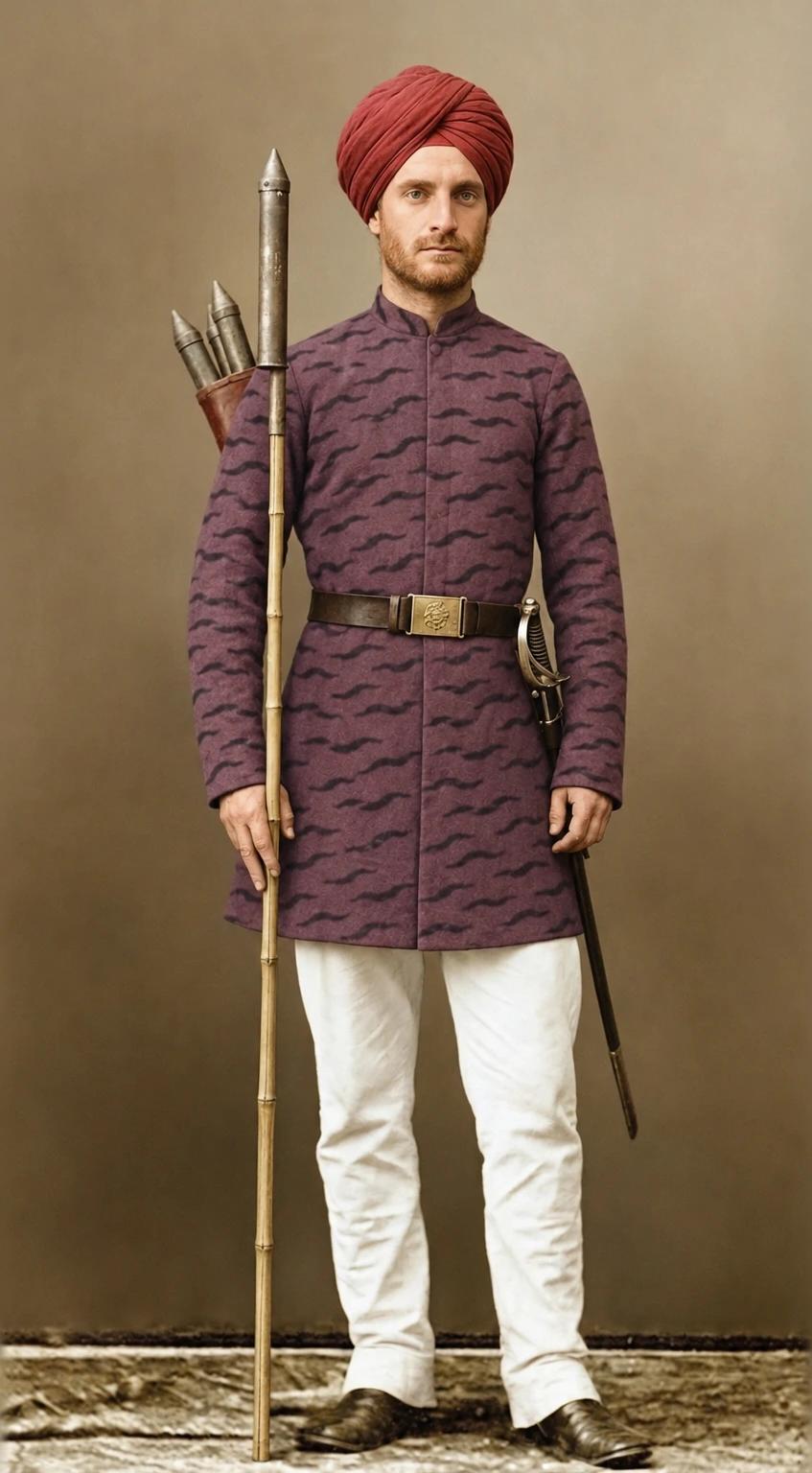
Uniform and equipment
| Uniform | Tunic, turban |
|---|---|
| Dress uniform | N/A |
| Headgear | Turban |
| Equipment | Iron-cased rockets, sword |
| Insignia and standard | Bubri tiger-stripe emblem stamped on rockets/tunics |
Service record
| First appeared | 1780s |
|---|---|
| Peak strength | 6,000 men |
| Recruited from | Specialized Troops |
| Primary tactic | Rocket Barrage |
| Signature engagement | Battle of Pollilur (1780) |
| Motto or battle cry | Asadullah al-Ghalib (The Victorious Lion of God) |
| Obsolescence | British Congreve Rocket |
Timeline
- 1761: Formation of the Corps. Hyder Ali usurps the throne and begins formalizing the rocket units, replacing paper casings with iron cylinders for greater range and payload.
- 1780: The Pollilur Disaster. Mysore rocketeers demonstrate the weapon's lethality against massed infantry, destroying Baillie's force.
- 1782: Ascension of Tipu. Tipu Sultan expands the rocket corps to nearly 5,000 troops, integrating them into every brigade of his army.
- 1792: Third Anglo-Mysore War. Rockets are used extensively to harass British supply lines and during the defense of the capital, though the war ends in a treaty.
- 1799: Fall of Srirangapatna. Tipu is killed in action. The British capture 600 launchers and 700 serviceable rockets, shipping them to England for reverse engineering.
Battles
Battle of Pollilur
The rocketeers' finest hour. A massed barrage detonated the British ammunition tumbrils, plunging Colonel Baillie's square into chaos. The Mysorean cavalry exploited the panic, resulting in the worst defeat the East India Company had suffered on the subcontinent to date.
Siege of Srirangapatna
In the final stand of the Tiger, rocketeers fired relentlessly from the ramparts. Though they inflicted heavy casualties and psychological terror, the British eventually breached the walls. The capture of the armory led directly to the development of the Congreve rocket in Europe.
Battle of Sultanpet Tope
A night engagement where Arthur Wellesley (later Duke of Wellington) was disoriented and forced to retreat by a heavy rocket barrage and musket fire. It was a rare tactical humiliation for the future victor of Waterloo, proving the psychological impact of the weapon.
Commanders
Tipu Sultan
Known as the Tiger of Mysore, Tipu was a visionary innovator who expanded the rocket corps to 5,000 men. He authored the 'Fathul Mujahidin', a military manual detailing rocket organization, and personally led his Cushoons (brigades) to rain iron fire upon the British East India Company.
Hyder Ali
The formidable father of Tipu, Hyder Ali recognized the potential of pyrotechnics as true artillery. He transitioned rockets from ceremonial fireworks to iron-cased instruments of war, establishing the first specialized companies of rocketeers to harass British columns in the Carnatic.
Tactics
Massed Volley Fire
Hundreds of rocketeers would fire simultaneously to saturate an area, breaking enemy formations through noise, smoke, and explosive impact.
Ricochet Fire
Firing rockets at a low angle to skip off the hard ground, causing them to move erratically like 'serpents' through cavalry lines to hamstring horses.
Incendiary Targeting
Specifically aiming high-arc shots at enemy ammunition wagons and supply trains to trigger secondary explosions.