
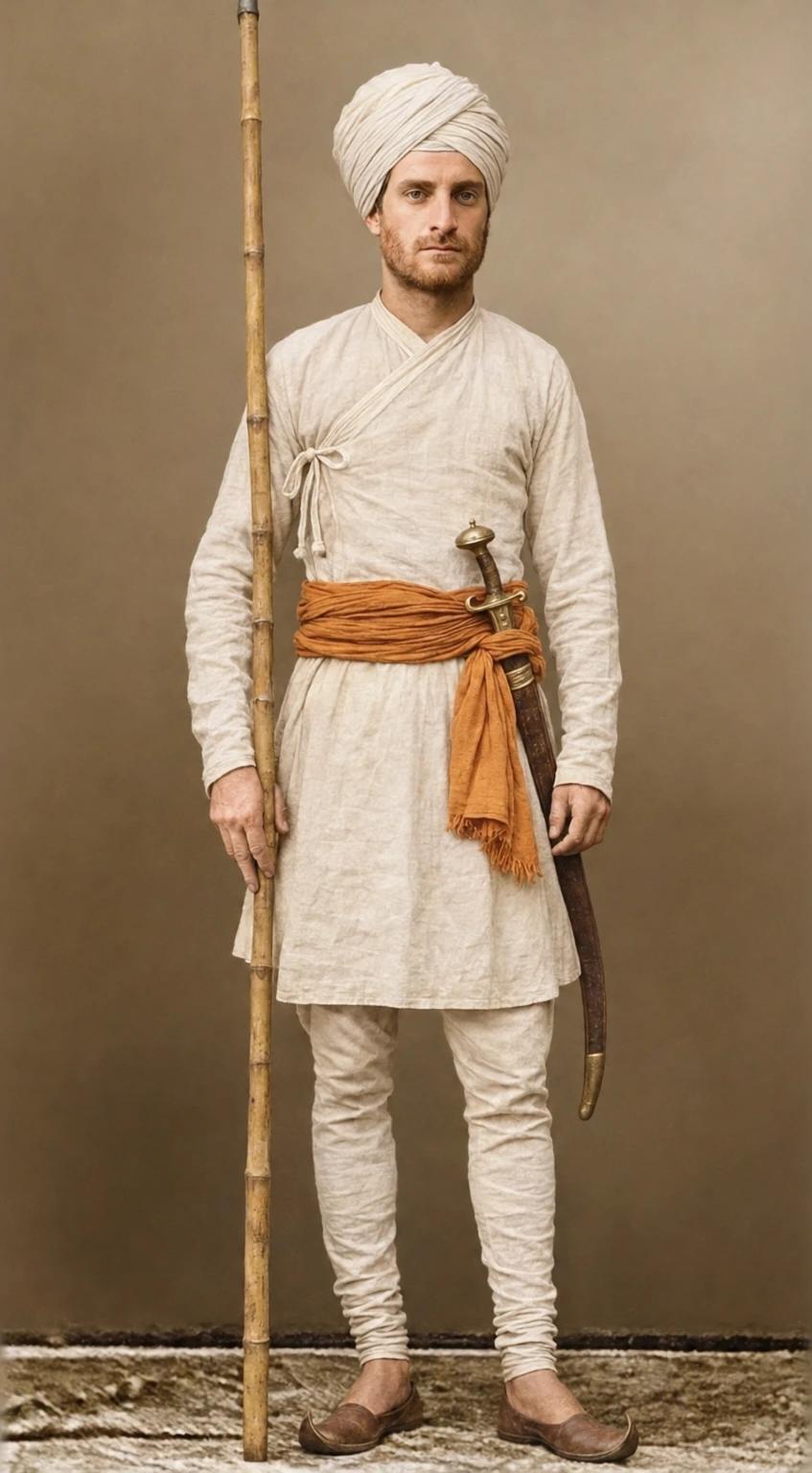
Uniform and equipment
| Uniform | Light tunic, turban, cummerbund |
|---|---|
| Dress uniform | N/A |
| Headgear | Turban |
| Equipment | Lance, sword, shield |
| Insignia and standard | Bhagwa Dhwaj saffron swallowtail flag |
Service record
| First appeared | 17th Century |
|---|---|
| Peak strength | Huge swarms |
| Recruited from | Bargirs (State Provided) |
| Primary tactic | Guerilla Warfare (Ganimi Kava) |
| Signature engagement | Battle of Palkhed (1728) |
| Motto or battle cry | Har Har Mahadev! (Hail Lord Mahadev) |
| Obsolescence | British Conquest |
Timeline
- 1657: Formation of the Bargirs. Shivaji Maharaj institutionalizes the cavalry, creating a state-funded standing army (Bargirs) distinct from feudal levies (Silidars).
- 1674: Coronation of Shivaji. Establishment of the Maratha Empire; the light cavalry becomes the primary instrument of state power projection.
- 1720: Ascension of Baji Rao I. The era of aggressive expansion begins; the light horse transitions from defensive guerillas to imperial conquerors.
- 1728: Triumph at Palkhed. The definitive validation of Maratha light cavalry tactics against heavy Mughal-style armies.
- 1758: Capture of Peshawar. Maratha forces reach their zenith, planting their flag in modern-day Pakistan, 2000km from their homeland.
- 1761: Catastrophe at Panipat. A crushing defeat halts northward expansion and decimates the veteran cavalry cadres.
- 1818: End of the Empire. The Third Anglo-Maratha War concludes with the defeat of the Peshwa, marking the end of the Maratha cavalry's operational history.
Battles
Battle of Palkhed
Baji Rao's masterpiece of strategic mobility. He lured the Nizam's massive, artillery-heavy army into waterless terrain, cut off their supplies, and forced a humiliating surrender without a major frontal assault. A textbook example of light cavalry dominance.
Raid on Delhi
To prove the reach of the Maratha arm, Baji Rao skipped the Mughal main army and struck directly at the capital. He held Delhi for three days, defeated the relief force, and vanished before the main Mughal army could engage, shattering Mughal prestige.
Third Battle of Panipat
The tragic twilight of the light horse. Forced into a static defense to protect a baggage train and heavy artillery against the Afghans, the cavalry lost their mobility. Despite heroic charges, the flower of the Maratha army was slaughtered.
Commanders
Baji Rao I
The unvanquished Peshwa who transformed the Maratha state into an empire. A cavalry genius, he fought 41 major battles and never lost one, utilizing speed to outmaneuver the heavy Mughal armies. He died of heatstroke in camp, living and dying in the saddle.
Chhatrapati Shivaji Maharaj
The architect of Maratha independence and the father of 'Ganimi Kava' (guerilla warfare). He forged the initial light cavalry units from the rugged Mawalas, emphasizing mobility over heavy armor to dominate the treacherous Deccan terrain.
Santaji Ghorpade
A terrifying commander during the 27-year war against Aurangzeb. Known for his ruthlessness and discipline, his lightning raids were so feared that Mughal horses reportedly refused to drink water if they sensed his presence.
Tactics
Ganimi Kava
Literally 'Enemy Maneuver'. A doctrine of avoiding pitched battles, cutting supply lines, and harassing the enemy until they were exhausted and demoralized.
Scorched Earth
Burning standing crops and poisoning wells in the path of invading armies to deny them local forage, forcing them to rely on vulnerable supply trains.
The False Retreat
Feigning panic to draw enemy heavy cavalry out of formation, then wheeling around to surround and annihilate the disorganized pursuers.
Night Raids
Using the cover of darkness and superior local knowledge to strike enemy encampments, causing chaos and sleep deprivation.