
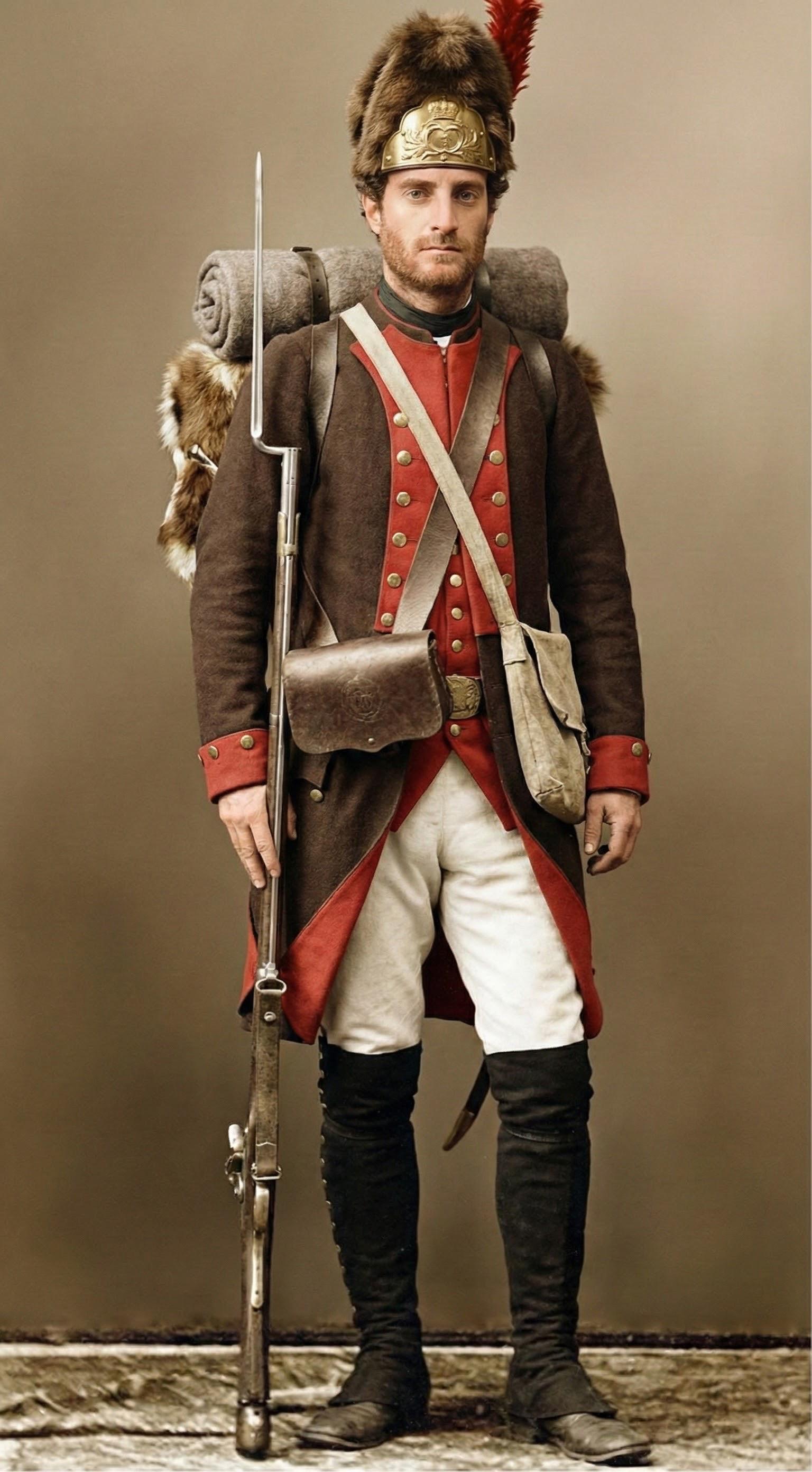
Uniform and equipment
| Uniform | Brown coat, blue or red facings, Croatian-style |
|---|---|
| Dress uniform | Brown with colored sash, traditional elements |
| Headgear | Black shako or red cap with plume |
| Equipment | Rifle, yataghan, pistols |
| Insignia and standard | Double-headed Austrian imperial eagle brass plate |
Service record
| First appeared | 1740s |
|---|---|
| Peak strength | 40,000 men |
| Recruited from | Balkan Frontiersmen |
| Primary tactic | Irregular Skirmishing |
| Signature engagement | Seven Years' War |
| Motto or battle cry | Dieu et l'Empereur (God and the Emperor) |
| Obsolescence | Dissolution of Military Frontier |
Timeline
- 1522: Establishment of the Frontier. The Habsburgs establish the Military Frontier (Militärgrenze) as a buffer zone against Ottoman expansion.
- 1741: Pandur Recruitment. Baron von Trenck raises a corps of irregular Pandurs, introducing the rest of Europe to the ferocity of Balkan border troops.
- 1756: Seven Years' War. Grenzers are fully integrated into Austrian battle plans, becoming the premier light infantry of Europe.
- 1769: Regimental Reforms. The irregular bands are standardized into numbered Grenzer regiments, balancing discipline with their natural aggression.
- 1809: Napoleonic Campaigns. Grenzers see extensive action against the French, adapting their skirmishing tactics to modern warfare.
- 1881: Demilitarization. The Military Frontier is dissolved, and the Grenzer regiments are absorbed into the regular Austro-Hungarian line infantry.
Battles
Battle of Soor
While the main Austrian army faltered, Grenzer irregulars executed a daring raid on the Prussian camp. They looted Frederick the Great's tent and captured his beloved whippet, Biche, proving no king was safe from their reach.
Battle of Hochkirch
A masterclass in surprise. Under cover of darkness and thick woods, Grenzer light infantry infiltrated Prussian positions, slaughtering sentries and allowing the main Austrian force to crush Frederick's army in a dawn ambush.
Battle of Marengo
Facing Napoleon, the Grenzers fought with rugged tenacity in the fontanile terrain. Though the battle ended in French victory, the border troops inflicted heavy casualties, delaying the French advance with deadly accurate rifle fire.
Commanders
Gideon Ernst von Laudon
Starting his career among the irregulars, Laudon rose to become Austria's finest field marshal. He understood the chaotic genius of the Grenzers, utilizing their skirmishing capabilities to harass Frederick the Great's disciplined columns into exhaustion.
Josip Jelačić
Ban of Croatia and a beloved leader of the border regiments. During the revolutions of 1848, he mobilized the Grenzers not just as border guards, but as a formidable loyalist army that helped save the Habsburg Monarchy from collapse.
Baron Franz von Trenck
A volatile and ferocious commander of the Pandurs, Trenck embodied the terrifying reputation of the border troops. His irregulars were notorious for their brutality and fearlessness, raiding deep behind Prussian lines and striking terror into the heart of the enemy.
Tactics
Petite Guerre
The 'Little War'—a strategy of relentless harassment, attacking supply convoys, and picking off stragglers to demoralize the enemy before the main battle.
Swarm Skirmishing
Deploying in loose, irregular clouds rather than rigid lines, utilizing terrain for cover to snipe at officers and artillery crews.
Cordon System
A defensive tactic involving a chain of watchtowers and patrols to seal the border against Ottoman raids and plague outbreaks.