
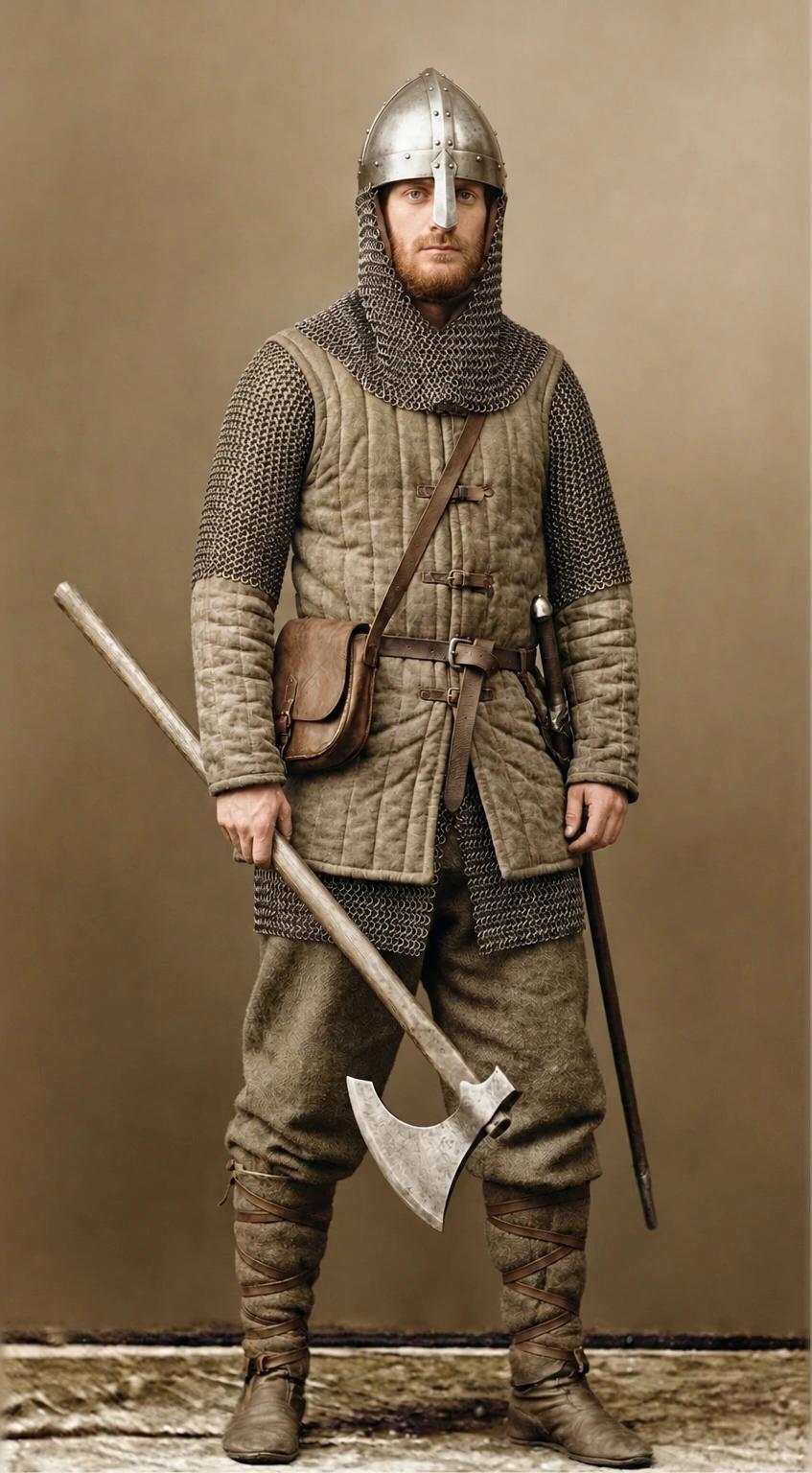
Uniform and equipment
| Uniform | Chainmail hauberk, conical helmet, quilted coat |
|---|---|
| Dress uniform | N/A |
| Headgear | Iron helmet (bascinet style) |
| Equipment | Sparth axe (two-handed), claymore, darts |
| Insignia and standard | None; identified by Sparth axe and mail |
Service record
| First appeared | 13th Century |
|---|---|
| Peak strength | Thousands in clan service |
| Recruited from | Norse-Gael Warriors |
| Primary tactic | Heavy Axe Strike |
| Signature engagement | Battle of Knockdoe (1504) |
| Motto or battle cry | Farrah! (Strike!) |
| Obsolescence | English Conquest / Gunpowder |
Timeline
- 1259: Arrival in Ireland. Aedh O'Connor of Connacht marries the daughter of a Hebridean King, receiving 160 Gallowglass warriors as a dowry, marking their formal introduction to Irish warfare.
- 1300: Establishment of the MacSweeneys. The Mac Suibhne clan settles in Donegal, becoming the first and most prominent professional Gallowglass family in Ireland.
- 1315: Bruce Campaign. Gallowglass units fight alongside Edward Bruce during his invasion of Ireland, cementing their reputation as elite shock troops.
- 1504: Peak Dominance. The Battle of Knockdoe showcases the Gallowglass as the decisive arm of Irish armies, though the high casualties signal the lethality of their internecine wars.
- 1560: Elizabethan Wars. Gallowglass serve as the backbone of resistance against Tudor conquest, though gunpowder weapons begin to challenge their heavy armor.
- 1603: Disbandment. Following the defeat in the Nine Years War and the enforcement of English law, the traditional system of 'coign and livery' that supported the Gallowglass is abolished.
Battles
Battle of Knockdoe
Known as the 'Battle of the Axes', this was the bloodiest clash of Gallowglass against Gallowglass. Despite their stoic discipline and fearsome axe-work, the Burke forces were overwhelmed by the Earl of Kildare's superior numbers and archery.
Battle of Farsetmore
The MacSweeneys, fighting for the O'Donnells, utilized the rising tide to trap the O'Neills. Their heavy infantry charge shattered the exhausted enemy, proving that discipline triumphs over sheer numbers.
Battle of the Yellow Ford
The Gallowglass provided the iron backbone for Hugh O'Neill's ambush. As the English lines faltered under Irish skirmishing, the heavy infantry moved in to butcher the disorganized retreat.
Commanders
Maol Mórdha Mac Suibhne
A legendary captain of the MacSweeney Gallowglass. At the Battle of Knockdoe, he led his heavy infantry in a ferocious clash against fellow mercenaries, defining the era of the axe.
Sorley Boy MacDonnell
A relentless warrior-chieftain of the MacDonnells of Antrim. He defied the armies of Elizabeth I for decades, securing his clan's legacy in Ulster through blood, iron, and political cunning.
Tactics
The Sparth Stroke
An overhead, gravity-assisted strike with the heavy axe designed to crush armor and bone alike, often targeting the head or shoulder.
Iron Wall
Gallowglass would form a dense, unyielding line of mail and iron, acting as a heavy anchor around which lighter, more mobile Kerne troops would maneuver.
Missile Volley
Before contact, the unit would unleash a synchronized volley of heavy darts to create gaps in the opposing formation for their axes to exploit.