
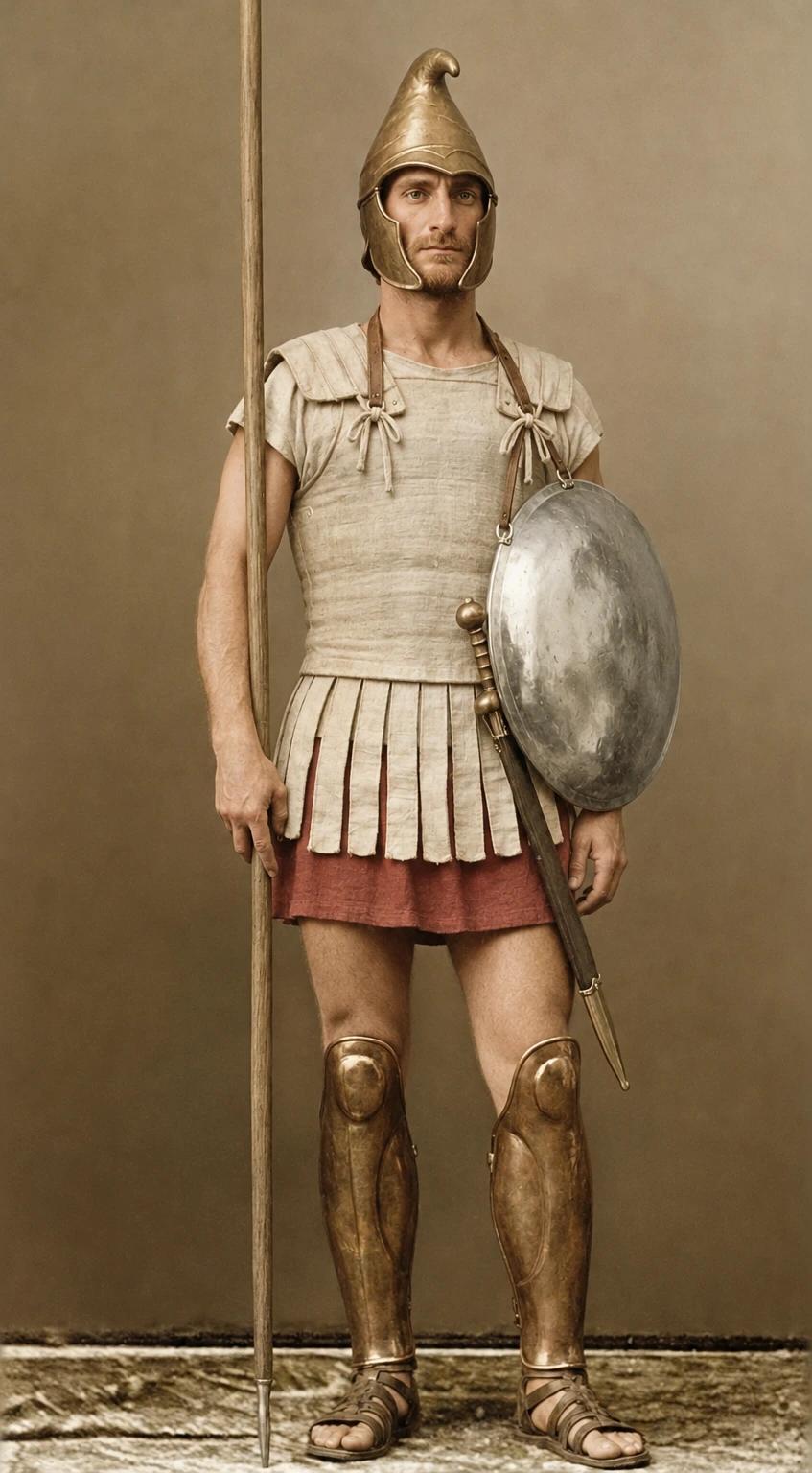
Uniform and equipment
| Uniform | Silver-plated shield, scale armor, crimson cloak |
|---|---|
| Dress uniform | Highly polished silver gear, purple embroidery |
| Headgear | Thracian or Phrygian helmet with wreaths |
| Equipment | Sarissa (pike), sword, silver-faced shield |
| Insignia and standard | Plain polished silver shield face |
Service record
| First appeared | 327 BC |
|---|---|
| Peak strength | 3,000 men |
| Recruited from | Veterans of Alexander |
| Primary tactic | Unstoppable Phalanx Push |
| Signature engagement | Battle of Paraitacene (317 BC) |
| Motto or battle cry | Alalai! (Battle cry) |
| Obsolescence | Roman Legion Tactics |
Timeline
- 315: Disbandment and Exile. Fearing their treachery, Antigonus breaks up the unit and sends them to Sibyrtius in Arachosia with secret orders to send them on suicide missions until none remain.
- 316: The Great Betrayal. After Gabiene, the unit hands over Eumenes to Antigonus in exchange for their captured families and treasure.
- 319: Alliance with Eumenes. The Silver Shields pledge loyalty to Eumenes of Cardia, the Royal Secretary, fighting for the Argead house against Antigonus.
- 321: Triparadisus Agreement. The unit is placed under the command of Antigenes and tasked with transporting the royal treasury.
- 323: Death of Alexander. Following Alexander's death in Babylon, the unit refuses to follow a single successor, becoming an independent, high-value mercenary corps.
- 327: Renaming. Alexander the Great renames his veteran Hypaspists the 'Argyraspides' (Silver Shields) in India to honor their undefeated service.
Battles
Battle of the Hydaspes
Serving as the elite Hypaspists before their renaming, they held the line against King Porus's war elephants. Their discipline in the face of monstrous beasts cemented their reputation as the anvil upon which Alexander broke his enemies.
Battle of Paraitacene
Fighting for Eumenes, the Silver Shields—many over 60 years old—shattered Antigonus's infantry. They taunted the enemy as 'orphans' before slaughtering them, proving that age had not dulled their lethal edge.
Battle of Gabiene
Tactically, the Silver Shields crushed the opposing phalanx again. However, Antigonus's cavalry seized their baggage train (wives and loot). To retrieve their lives' earnings, they betrayed their general, Eumenes, marking the unit's moral and strategic end.
Commanders
Antigenes
A one-eyed veteran of Philip II and Alexander, Antigenes commanded the Silver Shields with iron discipline. Though elderly, his tactical brilliance and ferocity held the unit together through the chaos of the Diadochi wars until his execution by Antigonus.
Teutamus
Joint commander alongside Antigenes, Teutamus represented the mercenary spirit of the unit. While a capable officer, his political maneuvering and eventual negotiation for the return of the unit's baggage train led to the betrayal of Eumenes.
Tactics
The Veteran Shove
Utilizing decades of muscle memory, the unit executed the 'othismos' (mass push) with perfect synchronization, rolling over younger, less disciplined phalanxes.
Psychological Warfare
Before engagement, they would taunt enemies by highlighting their own age and the enemy's inexperience, demoralizing opponents before the pikes even lowered.
Independent Maneuver
Unlike standard levies, the Silver Shields could perform complex evolutions (wheeling, refusing a flank) without losing cohesion amidst the chaos of battle.