
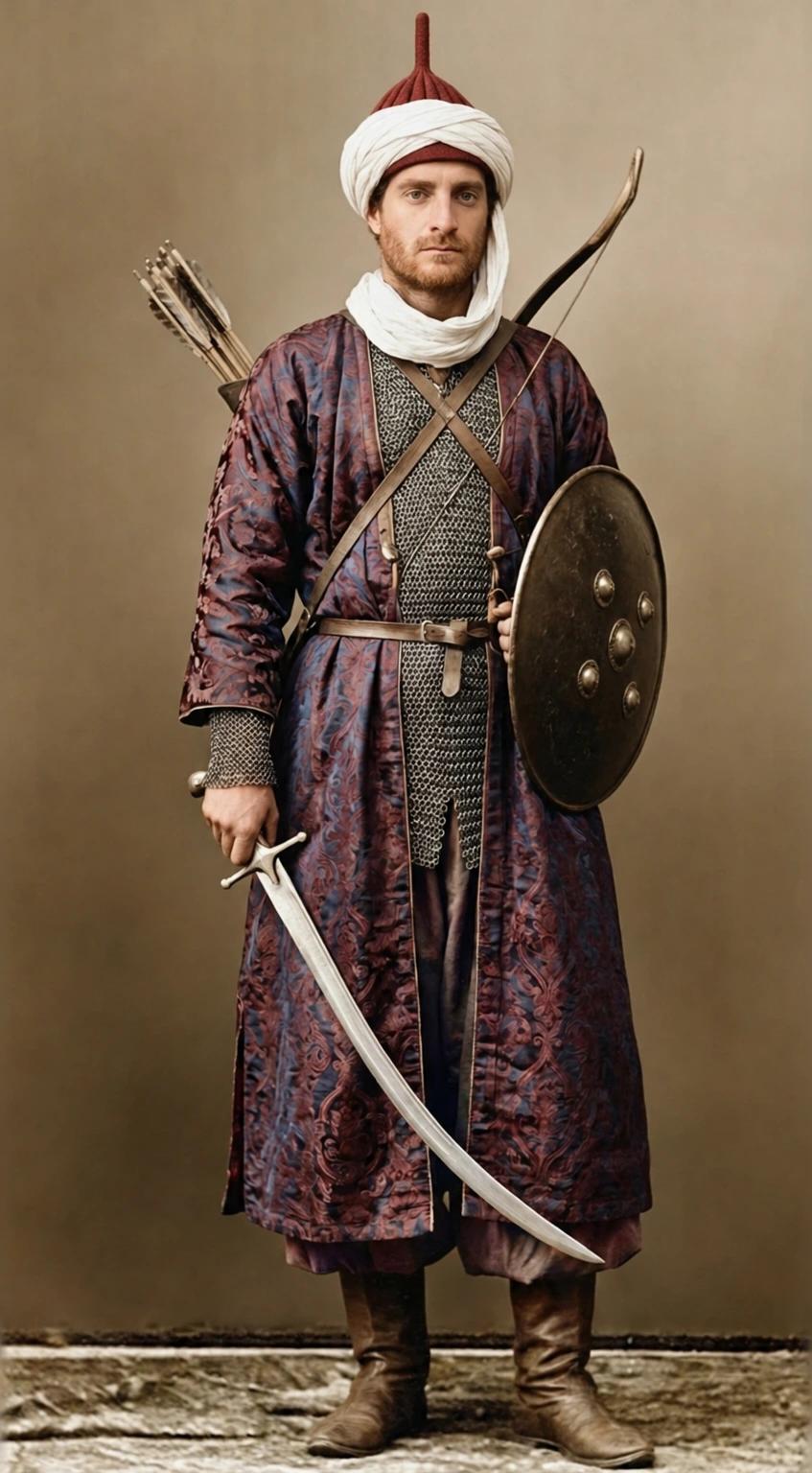
Uniform and equipment
| Uniform | Colorful robes and mail, characteristic red cap with 12-gored crown |
|---|---|
| Dress uniform | Embroidered silk kaftans, gilded armor pieces, ornate belts |
| Headgear | Distinctive red taj cap with long tail |
| Equipment | Lance, shamshir, dagger, bow and pistol in later period |
| Insignia and standard | Taj-i Haydari crimson 12-gored cap |
Service record
| First appeared | 1500s |
|---|---|
| Peak strength | 20,000+ men |
| Recruited from | Turkoman Tribes / Religious Zealots |
| Primary tactic | Fanatical Charge |
| Signature engagement | Battle of Chaldiran (1514) |
| Motto or battle cry | Qurban oldiğim (May I be sacrificed for you) |
| Obsolescence | Shah Abbas Military Reforms |
Timeline
- 1447: Militarization of the Safaviyya. Under Sheikh Junayd, the Sufi order begins transforming into a militant movement, recruiting Turkoman tribesmen.
- 1501: Conquest of Tabriz. Ismail I and the Qizilbash seize the capital, declaring Twelver Shi'ism the state religion and establishing the empire.
- 1514: The Trauma of Chaldiran. Defeat by Ottoman gunpowder forces shatters the belief in the Shah's invincibility, leading to tactical introspection.
- 1588: Reforms of Shah Abbas. Abbas I begins creating a standing army of musketeers (Ghulams) to reduce reliance on the unruly Qizilbash tribal chiefs.
- 1722: Fall of Isfahan. Afghan invaders sack the capital; the Qizilbash, factionalized and weakened by decades of neglect, fail to save the dynasty.
Battles
Battle of Sharur
The decisive engagement where 7,000 Qizilbash defeated a superior Aq Qoyunlu army of 30,000. This victory allowed Ismail to seize Tabriz and found the Safavid Empire, proving the shock value of the 'Red Heads' against traditional Turkoman forces.
Battle of Merv
A crushing defeat of the Uzbeks. The Qizilbash feigned retreat to lure the enemy into an ambush. The Uzbek leader, Muhammad Shaybani, was killed, and his skull was famously gold-plated and used as a drinking goblet by Shah Ismail.
Battle of Chaldiran
A tragic display of valor against technology. The Qizilbash cavalry repeatedly charged Ottoman artillery and musketeers with swords and bows. Though they suffered catastrophic losses, their refusal to retreat cemented their legend as fearless martyrs.
Commanders
Shah Ismail I
The charismatic founder of the Safavid dynasty and Grand Master of the Safaviyya order. Viewed as semi-divine by his followers, he led the Qizilbash from the front lines, channeling their religious fervor into a conquering force that unified Persia under Twelver Shi'ism.
Shah Abbas I (The Great)
While he later curbed their power with the creation of the 'Ghulam' slave corps, Abbas commanded the Qizilbash in critical campaigns against the Ottomans and Uzbeks, utilizing their ferocity while modernizing the state's military infrastructure.
Tactics
The Red Wind Charge
A massed, fanatical cavalry charge aimed at breaking enemy morale instantly. Unlike disciplined European charges, this was driven by religious ecstasy and a desire for martyrdom.
Turkoman Feigned Retreat
Retaining their steppe heritage, the Qizilbash would simulate a panicked rout to draw enemy formation apart before wheeling around to counter-attack.
Caracole Archery
Riding in rotating circles to deliver a continuous stream of arrows into a static enemy formation before closing in with lances.