
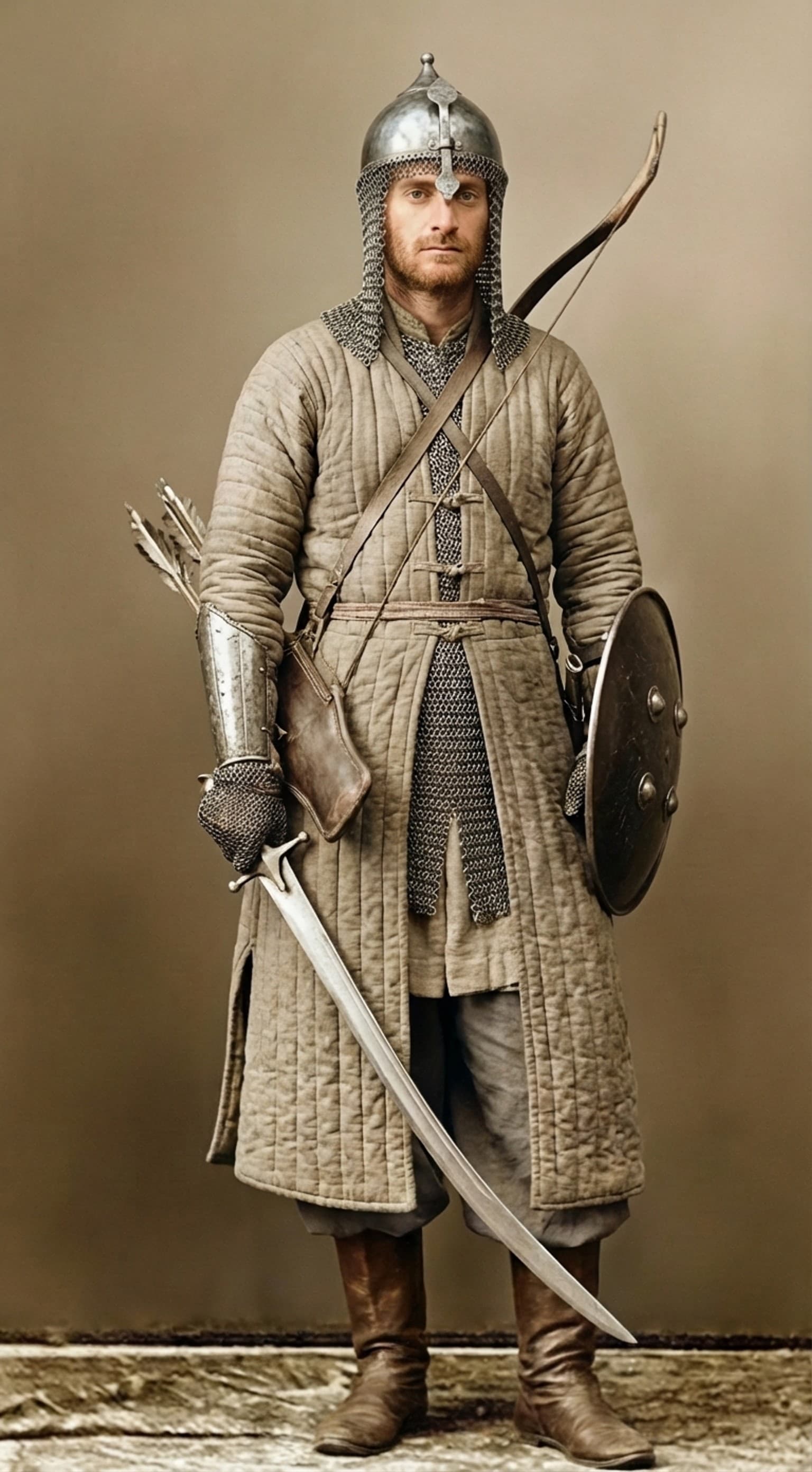
Uniform and equipment
| Uniform | Silk jama robes over mail, bright sashes |
|---|---|
| Dress uniform | Gold-brocade robes, richly dyed sashes, gilded armor elements |
| Headgear | Turban with jeweled aigrette, officers with more elaborate plumes |
| Equipment | Lance, talwar sabre, dhal shield, composite bow or matchlock |
| Insignia and standard | Lion and Sun (Shir-u-Khorshid) royal standard |
Service record
| First appeared | 16th century |
|---|---|
| Peak strength | 10,000 men |
| Recruited from | Gentleman Troopers |
| Primary tactic | Heavy Cavalry Shock |
| Signature engagement | Siege of Chittorgarh (1567) |
| Motto or battle cry | Allahu Akbar (God is Great) |
| Obsolescence | Decline of Central Authority |
Timeline
- 1567: Siege of Chittorgarh. The Ahadis prove their worth as shock troops in one of the most significant sieges in Indian history.
- 1574: Dag-o-Chehra System Implemented. Akbar institutes the branding of horses and descriptive rolls of soldiers to prevent fraud, formalizing the elite status of the Ahadis.
- 1658: War of Succession. The corps is split by civil war; veteran Ahadis suffer heavy casualties fighting for rival princes.
- 1681: Deccan Campaign Begins. Aurangzeb moves the capital to the south; Ahadis transition to grueling counter-insurgency warfare against the Marathas.
- 1739: Battle of Karnal. The decadent remnants of the unit are annihilated by Nadir Shah's Persian army, marking the effective end of the Ahadis as a fighting force.
Battles
Siege of Chittorgarh
A brutal four-month siege against the Rajput fortress. The Ahadis spearheaded the final assaults through breached walls, engaging in vicious close-quarters combat that broke the spirit of the defenders and cemented Mughal dominance.
Battle of Haldighati
In the sweltering heat of the narrow pass, Ahadis held the Mughal center against the desperate charge of Maharana Pratap's cavalry. Their discipline turned a chaotic melee into a grinding victory.
Battle of Samugarh
A fratricidal war of succession. The Imperial Ahadis loyal to Dara Shikoh fought bravely but were decimated by Aurangzeb's superior artillery and generalship, marking the shift of power to the Alamgir.
Commanders
Akbar the Great
The architect of the Mughal war machine. He formalized the Ahadi corps as a check against the power of the Mansabdars, creating a loyal, elite force answering only to the throne. He led from the front, forging an empire in blood and gunpowder.
Aurangzeb
A ruthless tactician who spent decades in the saddle. Under his command, the Ahadis were pushed to their limits in the endless attrition of the Deccan Wars, serving as the iron fist of his expansionist zeal.
Tactics
Combined Arms Shock
Ahadis would soften the enemy with composite bows before switching to lances and talwars for a crushing charge into the disorganized ranks.
The Qalb Defense
Positioned in the center (Qalb) of the battle formation, they acted as the Emperor's personal bulwark and the final reserve to plug gaps or deliver the killing blow.
Matchlock Volley
In later eras, Ahadis dismounted or fired from the saddle with matchlocks to break enemy infantry squares before closing in.