
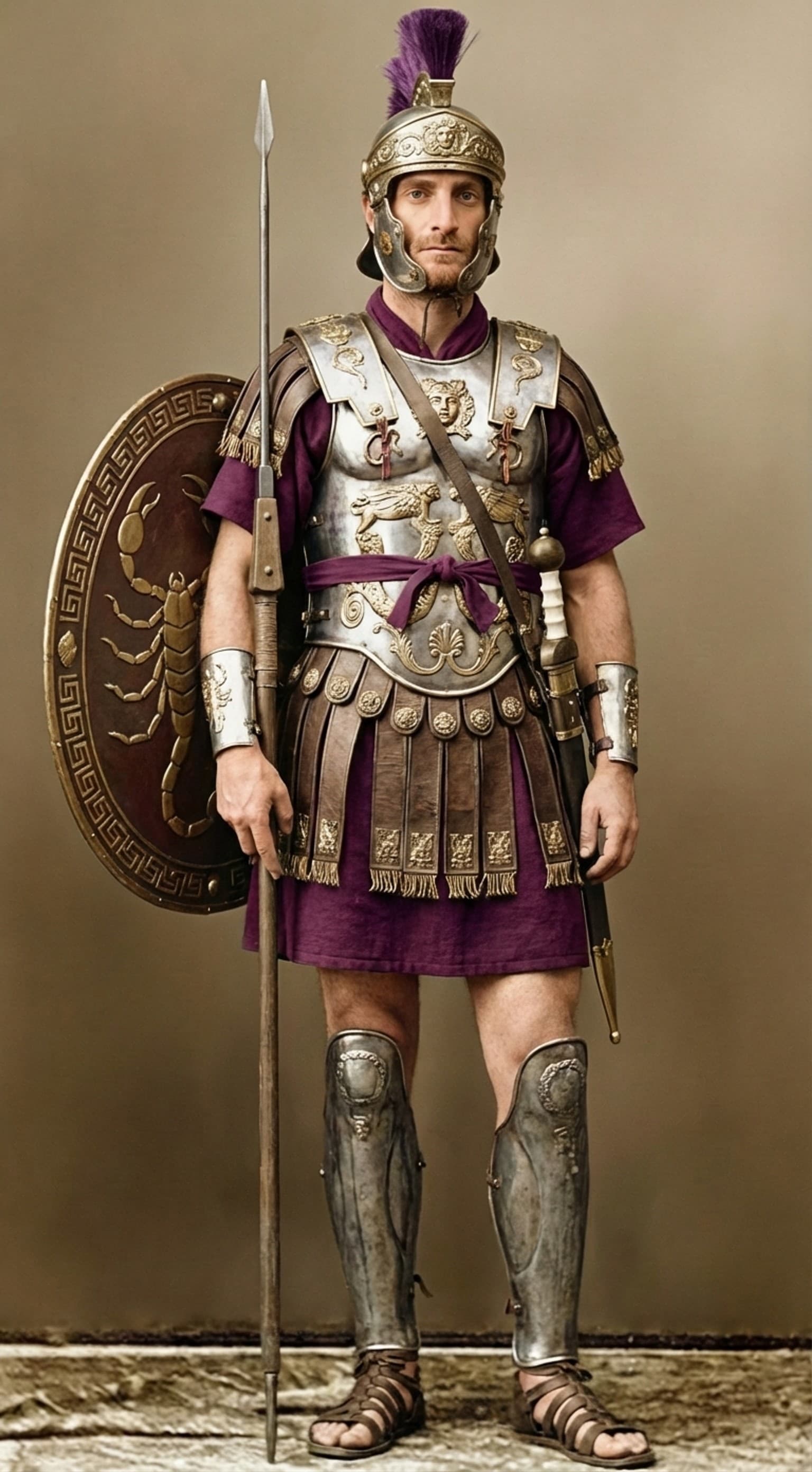
Uniform and equipment
| Uniform | Segmentata or mail armor over tunic with purple edging |
|---|---|
| Dress uniform | Highly polished armor, scarlet cloaks, decorated shield covers |
| Headgear | Helmets with transverse crests for officers |
| Equipment | Gladius short sword, pilum, scutum shield, dagger |
| Insignia and standard | Scorpion emblem on shields/standards |
Service record
| First appeared | 27 BC |
|---|---|
| Peak strength | 15,000 men |
| Recruited from | Italian Citizens / Veterans |
| Primary tactic | Heavy Infantry / Political Force |
| Signature engagement | Year of the Four Emperors (69 AD) |
| Motto or battle cry | Salus Imperatoris (Safety of the Emperor) |
| Obsolescence | Disbanded by Constantine |
Timeline
- 23: Castra Praetoria Built. Sejanus convinces Tiberius to house all cohorts in a single fortress in Rome, cementing their political influence.
- 27: Formation. Augustus formally establishes the Praetorian Guard as a permanent bodyguard unit of nine cohorts.
- 41: Assassination of Caligula. The Guard assassinates the Emperor and proclaims Claudius the successor, acting as kingmakers for the first time.
- 193: Auction of the Empire. In a display of absolute corruption, the Guard assassinates Pertinax and auctions the throne to the highest bidder, Didius Julianus.
- 193: Severan Reform. Septimius Severus disbands the treacherous Italian cohorts, replacing them with loyal legionaries from the Danube.
- 312: Disbandment. Following the defeat at Milvian Bridge, Constantine the Great permanently dissolves the Praetorian Guard.
Battles
First Battle of Bedriacum
During the Year of the Four Emperors, the Guard marched for Otho. Despite their elite status and ferocity, they were outmaneuvered by Vitellius's battle-hardened Rhine legions. Their defeat underscored that palace influence did not guarantee victory in open warfare.
Battle of the Milvian Bridge
The Guard's final stand. Loyal to Maxentius, they held the river bank against Constantine's veterans. Refusing to surrender, they were slaughtered where they stood, leading Constantine to permanently disband the unit and demolish their barracks.
Commanders
Lucius Aelius Sejanus
Prefect under Tiberius who transformed the Guard from a scattered bodyguard into a unified political powerhouse. He concentrated the cohorts into the Castra Praetoria, creating a sword of Damocles over the state until his own execution for treason.
Titus
Before ascending as Emperor, Titus served as Praetorian Prefect for his father Vespasian. A gritty soldier-prince, he brought a ruthless military discipline to the role, personally securing the Flavian dynasty's hold on power.
Tactics
Shock Assault
Unlike regular legions, Praetorians were often held in reserve to deliver a decisive, shattering blow to the enemy center.
Testudo Formation
An interlocking shield wall providing an impenetrable shell against projectile fire during sieges or advances.
Interior Guard
Specialized close-protection protocols for the Emperor, securing the palace perimeter and controlling access to the throne.