
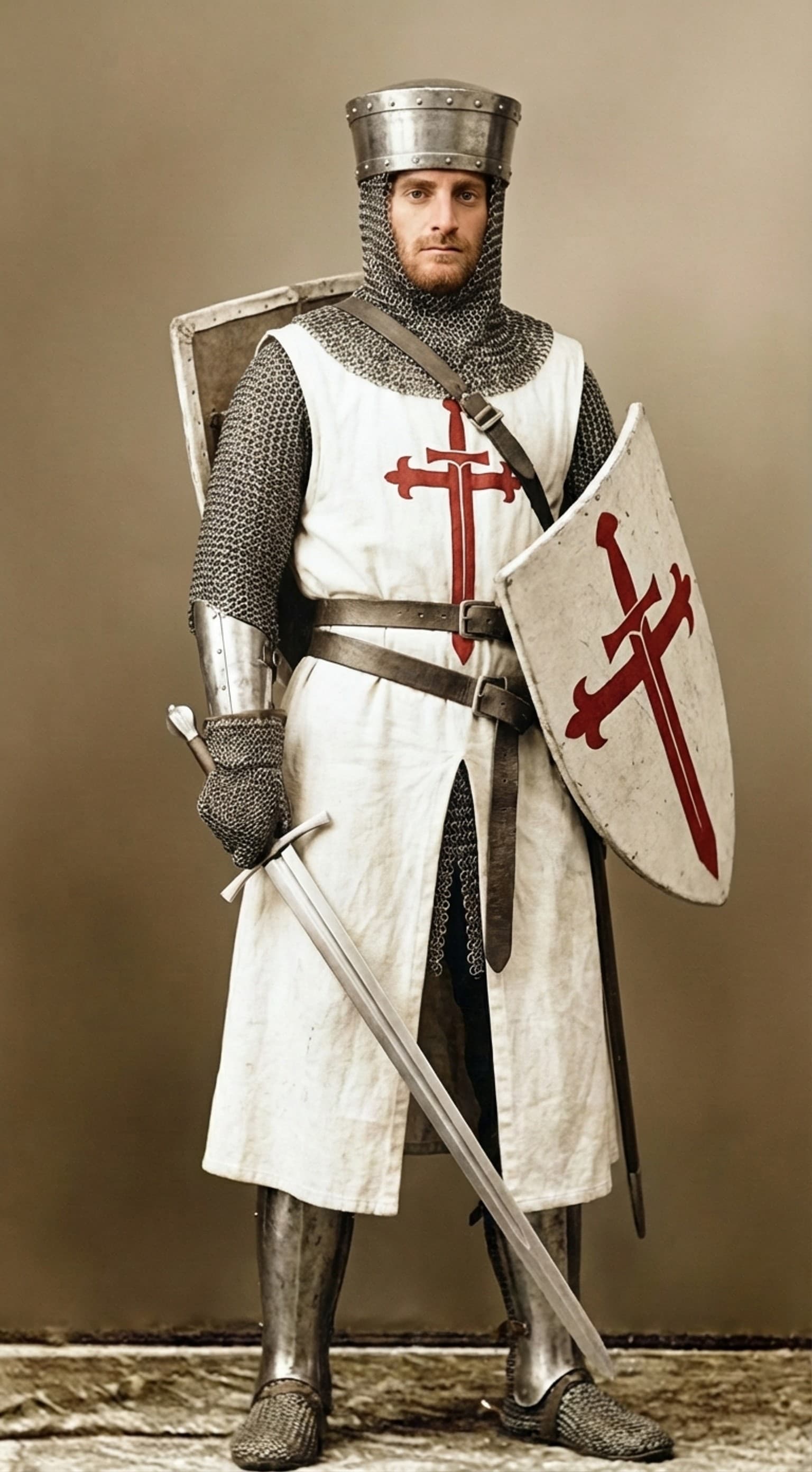
Uniform and equipment
| Uniform | White mantle with Red Sword/Cross |
|---|---|
| Dress uniform | N/A |
| Headgear | Great Helm |
| Equipment | Lance, Sword, Shield |
| Insignia and standard | Red sword and cross on white surcoat |
Service record
| First appeared | 1202 |
|---|---|
| Peak strength | Hundreds of Knights |
| Recruited from | German Nobility |
| Primary tactic | Heavy Cavalry Charge |
| Signature engagement | Battle of Saule (1236) |
| Motto or battle cry | Ferro Ignique (By Fire and Sword) |
| Obsolescence | Merged into Teutonic Order |
Timeline
- 1202: Foundation. Bishop Albert of Riga establishes the 'Fratres militiae Christi Livoniae' to aid in the conversion of the pagan Baltic tribes.
- 1204: Papal Recognition. Pope Innocent III officially sanctions the Order, granting them the right to keep a third of the lands they conquer.
- 1207: Terra Mariana. The Order establishes the 'Terra Mariana' (Land of Mary) as a principality of the Holy Roman Empire.
- 1209: Death of Wenno. Master Wenno is murdered; Volquin succeeds him and accelerates military expansion.
- 1217: Conquest of Estonia. Following the Battle of St. Matthew's Day, the Order solidifies control over southern Estonia.
- 1236: Disaster at Saule. The Order is decimated in a swamp ambush; the Master and the flower of the knighthood are slain.
- 1237: Merger and Dissolution. Pope Gregory IX decrees the remnants of the Swordbrethren merge into the Teutonic Order, becoming the Livonian Order.
Battles
Siege of Fellin
A brutal siege demonstrating the Order's engineering prowess. Utilizing trebuchets and siege towers, the Brothers breached the stronghold of the Saccalians, forcing a mass baptism of the survivors.
Battle of St. Matthew's Day
A decisive clash against a coalition of Estonian counties led by the chieftain Lembitu. The Brothers shattered the Estonian resistance, killing Lembitu and effectively breaking pagan power in the region for a generation.
Battle of Saule
The Order's catastrophic undoing. Lured into a boggy trap by Samogitians and Semigallians, the heavy cavalry was immobilized and butchered. Master Volquin and 48 knights fell, forcing the survivors to merge with the Teutonic Order.
Commanders
Volquin
The second and final Master of the Order, Volquin was a warrior-monk of immense ambition. He expanded the Order's dominion through ruthless campaigning but was ultimately undone by his own hubris, dying sword in hand amidst the slaughter at the Battle of Saule.
Wenno von Rohrbach
The first Master of the Swordbrethren, Wenno forged the Order from a disparate group of German crusaders into a cohesive fighting force. His tenure ended violently when he was murdered by one of his own knights in a dispute over discipline.
Tactics
The Boar's Snout
A wedge formation (Cuneus) where the most heavily armored knights formed the tip to shatter enemy infantry lines, followed by squires and sergeants.
Chevauchée
Aggressive raiding campaigns designed to burn villages, destroy crops, and terrorize the local pagan population into submission.
Combined Arms with Auxiliaries
Utilizing converted native infantry (Livs and Letts) as light skirmishers to screen the heavy cavalry's advance.