
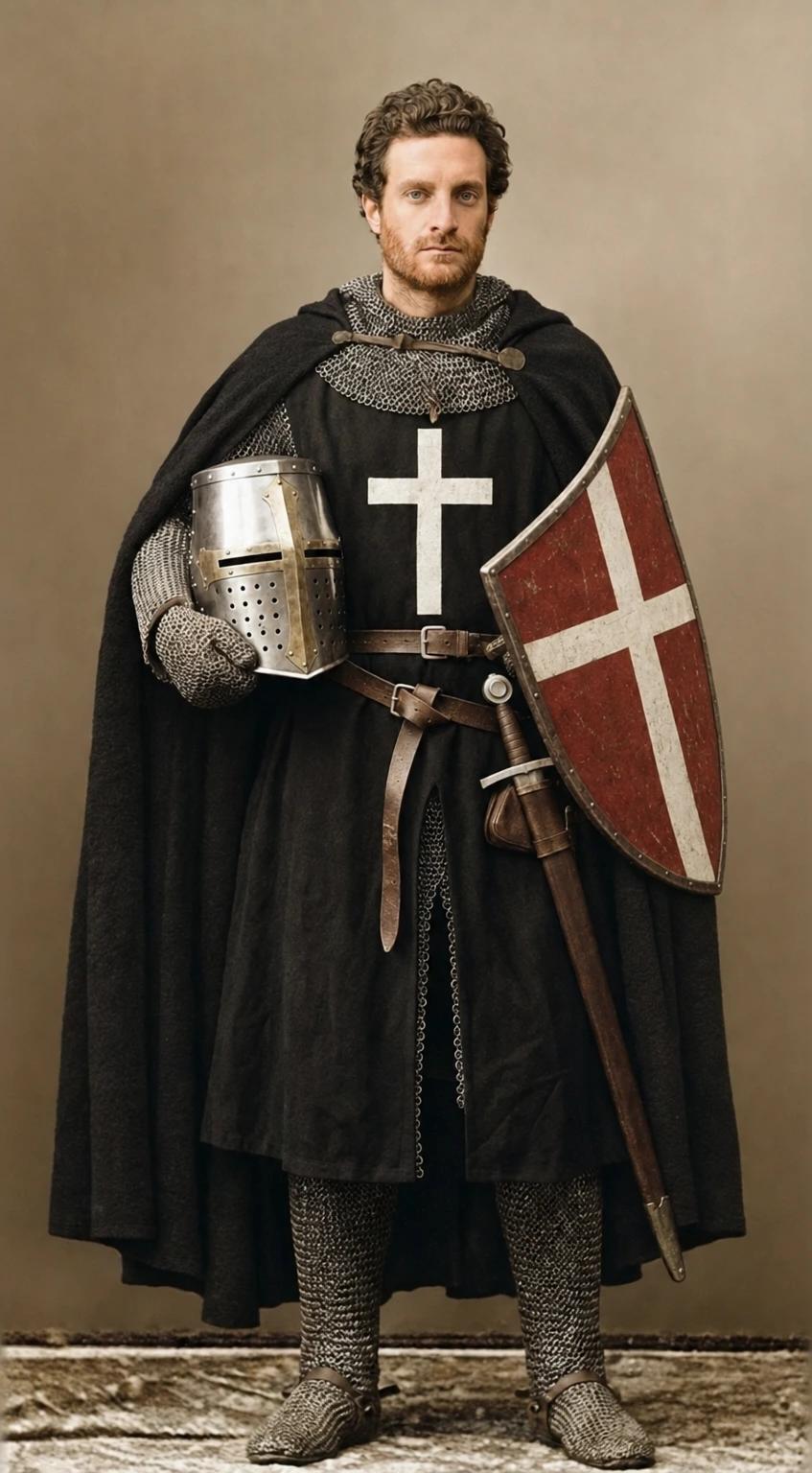
Uniform and equipment
| Uniform | Black mantle with white cross over mail |
|---|---|
| Dress uniform | Heavy black or crimson robes with large white cross |
| Headgear | Great helm or bascinet, some with cross motifs |
| Equipment | Lance, sword, shield, dagger, sometimes crossbow |
| Insignia and standard | White Maltese Cross on black/red surcoat |
Service record
| First appeared | 12th century |
|---|---|
| Peak strength | 1,500–2,000 knights and sergeants |
| Recruited from | Catholic Nobility |
| Primary tactic | Fortification Defense / Naval Boarding |
| Signature engagement | Great Siege of Malta (1565) |
| Motto or battle cry | Pro Fide (For the Faith) |
| Obsolescence | Napoleon's Conquest of Malta (1798) |
Timeline
- 1113: Papal Recognition. Pope Paschal II issues the bull 'Pie Postulatio Voluntatis', officially recognizing the Order as an independent religious and military body.
- 1291: Fall of Acre. Expulsion from the Holy Land forces the Order to move operations to Cyprus, beginning their transition to a naval power.
- 1309: Conquest of Rhodes. The Knights seize the island of Rhodes, establishing a sovereign territorial state and becoming the corsairs of Christendom.
- 1522: Loss of Rhodes. After a six-month siege by Suleiman the Magnificent, the Knights surrender Rhodes and wander the Mediterranean in exile.
- 1530: Grant of Malta. Holy Roman Emperor Charles V grants the barren islands of Malta and Gozo to the Order in exchange for the annual tribute of a Maltese Falcon.
- 1565: The Great Siege. The Order successfully defends Malta against the full might of the Ottoman Empire, halting Islamic expansion in the West.
- 1798: Expulsion by Napoleon. Napoleon Bonaparte captures Malta en route to Egypt; the Knights are dispersed, ending their military sovereignty.
Battles
Siege of Acre
The death knell of the Crusader States. The Hospitallers fought to the last man alongside the Templars to cover the evacuation of civilians. Though the city fell, their sacrificial rearguard action allowed the Order to survive and relocate to Cyprus.
Siege of Rhodes
A brutal test of endurance where the Knights repelled Mehmed II's forces. Utilizing superior artillery positions and desperate hand-to-hand combat in the moats, the Order inflicted massive casualties, forcing the Turks to withdraw in disgrace.
Great Siege of Malta
The Order's finest hour. 700 Knights and 8,000 soldiers held out against 40,000 Ottomans for four months. The savage defense of Fort St. Elmo and the blood-soaked breaches of Birgu halted the Ottoman advance into Europe, cementing the Hospitallers' legend as invincible defenders.
Battle of Lepanto
Serving on the Holy League's right flank, the Hospitaller galleys engaged in ferocious deck-to-deck combat. Despite their flagship being boarded and nearly overrun, they rallied to sink the Ottoman vessels, contributing to the destruction of the Turkish fleet.
Commanders
Jean Parisot de Valette
The iron-willed Grand Master who defined the Order's legacy. Already in his seventies during the Great Siege of Malta, he fought on the front lines, refusing to retreat. His fanatical discipline and tactical brilliance broke the back of the Ottoman Empire's expansion into the western Mediterranean.
Philippe Villiers de L'Isle-Adam
The tragic but noble defender of Rhodes in 1522. Despite a valiant six-month resistance against Suleiman the Magnificent, he was forced to surrender, securing safe passage for the Order. He later secured Malta from Charles V, giving the Knights a new home and purpose.
Pierre d'Aubusson
Known as the 'Shield of Christendom,' d'Aubusson orchestrated the miraculous defense of Rhodes in 1480. A master engineer and diplomat, he personally led counter-attacks into the breaches, sustaining multiple wounds to repel a Turkish army vastly outnumbering his garrison.
Tactics
Bastion Defense
Masters of siege warfare, they utilized star forts and overlapping fields of fire to bleed superior enemy numbers dry before they could reach the walls.
Galley Boarding
Aggressive naval tactic where Knights would ram enemy vessels and flood their decks with heavy infantry to engage in brutal close-quarters combat.
The Fighting Retreat
A disciplined withdrawal under fire, used effectively during the fall of the Crusader States to extract civilians and wounded while inflicting heavy losses on pursuers.
Combat Triage
Unique among military units of the time, they maintained dedicated field hospitals and logistics to treat wounded soldiers during active sieges, preserving manpower.