
Uniform and equipment
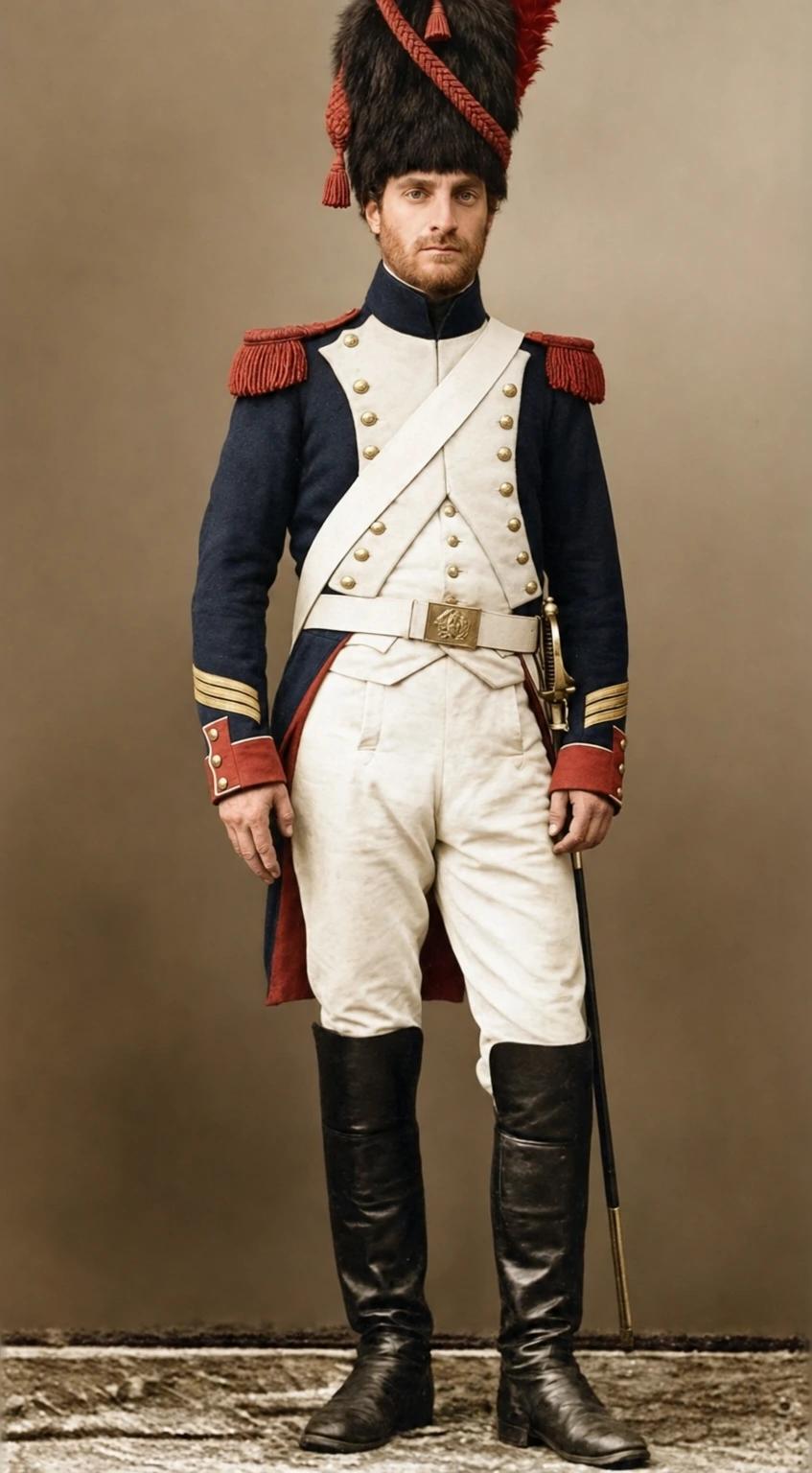
| Uniform | Dark blue coat with white lapels, scarlet cuffs and turnbacks, white breeches |
|---|---|
| Dress uniform | Blue with gold lace, tiger-skin saddle cloth |
| Headgear | Tall bearskin without front plate, red plume and orange cords |
| Equipment | Heavy cavalry sabre, pistols |
| Insignia and standard | Embroidered flaming grenades |
Service record
| First appeared | 1796 |
|---|---|
| Peak strength | 1,000 men |
| Recruited from | Battle-hardened Veterans (10+ years) |
| Primary tactic | Final Reserve Charge |
| Signature engagement | Battle of Eylau (1807) |
| Motto or battle cry | The Gods |
| Obsolescence | Fall of Napoleon |
Timeline
- 1796: Formation of the Guides. Originally formed as the Guides of the Army of Italy to protect General Bonaparte.
- 1804: Imperial Status. The Consular Guard becomes the Imperial Guard; the unit is officially designated the Grenadiers à Cheval.
- 1805: Battle of Austerlitz. They defeat the Russian Chevalier Guard in a violent melee, securing the Pratzen Heights.
- 1807: Charge at Eylau. The unit achieves legendary status by breaking the Russian center in a blizzard.
- 1812: Invasion of Russia. Kept largely in reserve at Borodino to preserve the Guard, a decision debated by historians.
- 1815: Disbandment. Following the Bourbon Restoration and the defeat at Waterloo, the unit is permanently dissolved.
Battles
Battle of Marengo
Fighting as the Consular Guard, they stood like a 'granite redoubt' against Austrian numbers. Though heavily outnumbered, their stoic defense bought time for Desaix's arrival, cementing their reputation for invincibility.
Battle of Eylau
In a blinding snowstorm, the Grenadiers launched one of history's greatest cavalry charges. Smashing through two Russian lines to save the center, they took heavy casualties but prevented a total French collapse.
Battle of Waterloo
The twilight of the Gods. They charged the British squares repeatedly near La Haye Sainte. Despite incredible valor and heavy losses, the mud and disciplined musketry of the Allies broke their momentum.
Commanders
Louis Lepic
A gritty warrior beloved by his men. At Eylau, under withering Russian fire, he famously shouted, 'Heads up, by God! Those are bullets, not turds!' before leading a devastating charge.
Jean-Baptiste Bessières
Marshal of the Empire and commander of the Imperial Guard cavalry. A figure of old-world chivalry, he led the Horse Grenadiers with cool-headed precision until his death by cannonball just before Lützen.
Frédéric Henri Walther
A stern Alsatian veteran who commanded the regiment through the later campaigns. Known for his iron discipline and imposing presence, he led the 'Gods' during the invasion of Russia and the defense of France.
Tactics
The Shock Charge
Riding massive black horses, they delivered a crushing kinetic impact intended to shatter enemy morale and formations instantly.
Strategic Reserve
Napoleon rarely committed them early. They were the 'Iron hammer' held back to deliver the final blow or salvage a desperate situation.
Psychological Warfare
Their towering appearance, silence in the ranks, and reputation as 'The Gods' often caused enemy lines to waver before contact.