
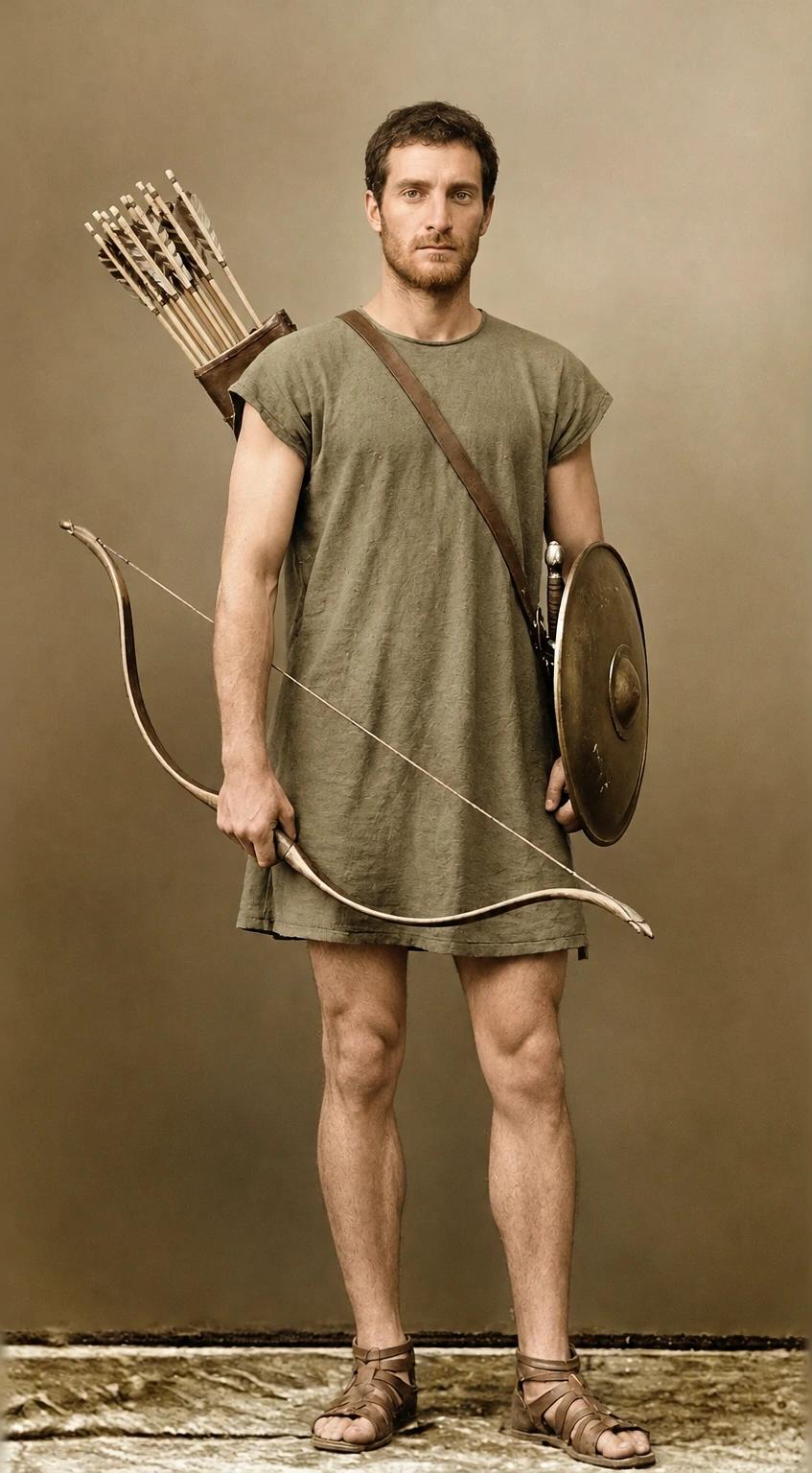
Uniform and equipment
| Uniform | Light tunic, small bronze shield (pelta) on arm |
|---|---|
| Dress uniform | N/A |
| Headgear | Simple cap or headband, sometimes bronze helmet |
| Equipment | Composite bow, arrows, sword, small shield |
| Insignia and standard | None; identified by small crescent-shaped pelta shields |
Service record
| First appeared | 5th Century BC |
|---|---|
| Peak strength | ~1,500 men in armies |
| Recruited from | Cretan Mercenaries |
| Primary tactic | Counter-Skirmish / Precision Fire |
| Signature engagement | Retreat of the Ten Thousand (401 BC) |
| Motto or battle cry | Alala! (War cry to Ares/Enyalius) |
| Obsolescence | Decline of Mercenary System |
Timeline
- 67: Conquest of Crete. Quintus Caecilius Metellus conquers the island of Crete to stop piracy, formally integrating its warrior population into the Roman military machine.
- 168: Roman Integration. Following the Battle of Pydna, Rome begins systematically hiring Cretans, eventually making them a staple auxiliary unit of the Republic.
- 334: Alexander's Invasion. 500 Cretan archers cross the Hellespont with Alexander, serving as his primary light infantry force throughout the conquest of Asia.
- 401: The Anabasis. The Cretan contingent serves as the rear guard for the Ten Thousand, innovating counter-skirmish tactics against Persian cavalry.
- 431: Peloponnesian War Escalation. Athens and Sparta begin heavily recruiting Cretan mercenaries, establishing their reputation as the premier specialists of the Greek world.
Battles
Battle of Pydna
A tragic civil clash where Cretan mercenaries fought on both the Roman and Macedonian sides. The Roman-allied Cretans proved superior in the broken terrain, helping to dismantle the rigid Macedonian phalanx and signaling the rise of the Legion.
Battle of Gaugamela
Deployed by Alexander to counter Darius's scythed chariots and Bactrian cavalry. The Cretans used precision fire to kill chariot drivers before they could impact the lines, neutralizing one of the Persian army's most terrifying weapons.
Battle of Cunaxa
Serving Cyrus the Younger, the Cretans fought valiantly. Though the Greeks won the tactical engagement, Cyrus was killed. The Cretans became the lifeline of the 'Ten Thousand,' holding off Persian cavalry swarms during the grueling retreat up the Tigris.
Commanders
Klearchos of Sparta
A hardened Spartan exile and mercenary warlord. While a hoplite by trade, he commanded the Peloponnesian contingent of the Ten Thousand, relying heavily on the Cretan corps to screen his heavy infantry from Persian harassers during the march into Babylon.
Kleinias
The trusted commander of Alexander the Great's elite archer corps. He led the Cretans through the Asian campaigns, using their superior range to shatter Scythian horse archers and screen the Macedonian phalanx until his death in battle.
Tactics
Fighting Retreat
The ability to loose arrows while moving backward, maintaining a lethal zone of control to prevent heavy infantry from being flanked.
Counter-Battery Fire
Specifically targeting enemy missile troops. Their superior bows allowed them to outrange most adversaries, silencing enemy skirmishers before the main clash.
Shielded Volley
Using the small 'pelta' shield to deflect incoming fire while maintaining a high rate of fire, a technique unique to these heavy skirmishers.