
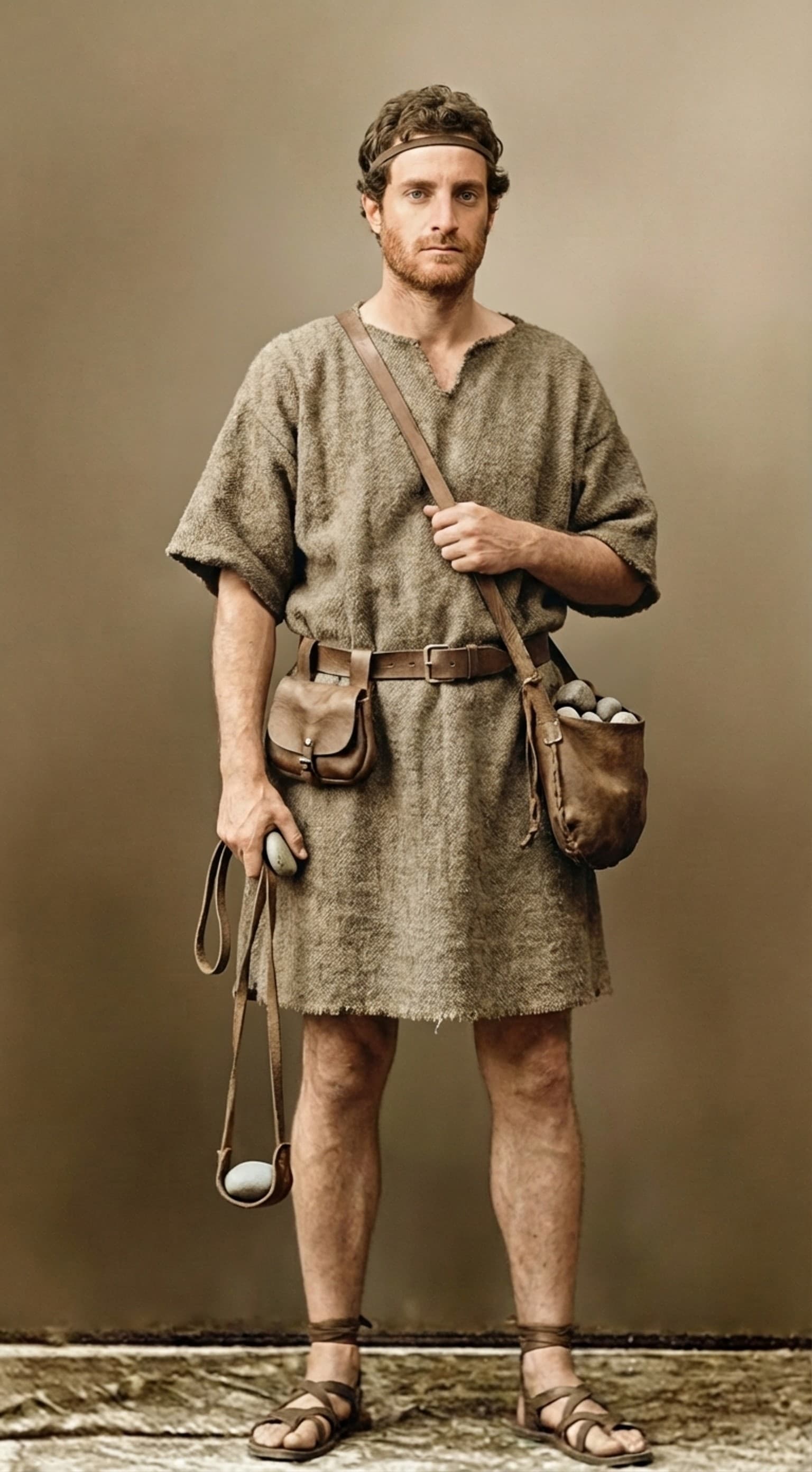
Uniform and equipment
| Uniform | Simple tunic, bag for stones, three slings (head, waist, hand) |
|---|---|
| Dress uniform | N/A |
| Headgear | None |
| Equipment | Three slings of different lengths, lead or stone shot, dagger |
| Insignia and standard | None; three slings carried |
Service record
| First appeared | 4th Century BC |
|---|---|
| Peak strength | ~2,000 men |
| Recruited from | Island Natives / Mercenaries |
| Primary tactic | Range Superiority / Shield Breaking |
| Signature engagement | Battle of the Trebia (218 BC) |
| Motto or battle cry | N/A (Whistling shot) |
| Obsolescence | Widespread Archery |
Timeline
- 106: Jugurthine War. Balearic auxiliaries fight under Marius, proving their worth to Rome in the deserts of North Africa.
- 123: Roman Conquest of Balearics. Quintus Caecilius Metellus conquers the islands to stop piracy; the slingers are subsequently integrated into the Roman military machine as auxiliaries.
- 217: Battle of Lake Trasimene. Slingers participate in the great ambush, firing from the high ground into the trapped Roman column.
- 218: Crossing the Alps. A contingent of slingers accompanies Hannibal across the Alps, surviving the harsh conditions to fight in Italy.
- 241: End of First Punic War. Balearic units return to Africa, playing a pivotal role in the subsequent Mercenary War due to disputes over payment.
- 406: Siege of Akragas. Early recorded use of Balearic mercenaries by Carthaginian generals during the wars in Sicily against the Greeks.
Battles
Battle of the Trebia
In the freezing mist, Balearic slingers decimated the Roman skirmishers (velites). Their superior range and heavier projectiles forced the Romans back, leaving the legionaries blind and exposed to the Carthaginian heavy infantry and cavalry encirclement.
Battle of Cannae
Deployed as a screen, the slingers unleashed a relentless hail of lead against the advancing Roman mass. Their precision fire targeted officers and broke the cohesion of the front lines before withdrawing to the flanks to continue the slaughter.
Battle of Zama
Veterans of the Italian campaign stood in the third line. Despite their lethal accuracy, they were ultimately overwhelmed by Scipio Africanus's superior cavalry tactics and the sheer weight of the Roman heavy infantry push.
Commanders
Hamilcar Barca
The Lion of Carthage who recognized the lethal potential of Balearic mercenaries. He integrated them into his elite corps during the First Punic War and the Mercenary War, utilizing their superior range to harass and dismantle heavier Roman formations from a distance.
Hannibal Barca
History's greatest tactician, who wielded the slingers as a surgical instrument during his Italian campaign. He relied on their ability to outrange Roman velites, using them to screen his movements and provoke the legions into rash attacks at Trebia and Cannae.
Tactics
Tri-Range Volley
Utilization of three specific slings for different distances. They began engaging at extreme range, switched to medium slings as the enemy closed, and used short slings for lethal close-quarters headshots.
Shield Cracking
Firing heavy stones in high arcs to crash down upon enemy shields. The kinetic energy was sufficient to split wood or break the arm of the soldier holding the shield.
Concussive Precision
Targeting the helmets of armored opponents. Even if the lead shot did not penetrate, the concussive force could knock a man unconscious or kill him instantly through blunt trauma.
Skirmish Screen
Deploying ahead of the main battle line to harass enemy deployment, silence enemy archers (whom they outranged), and screen the movements of their own heavy cavalry.