
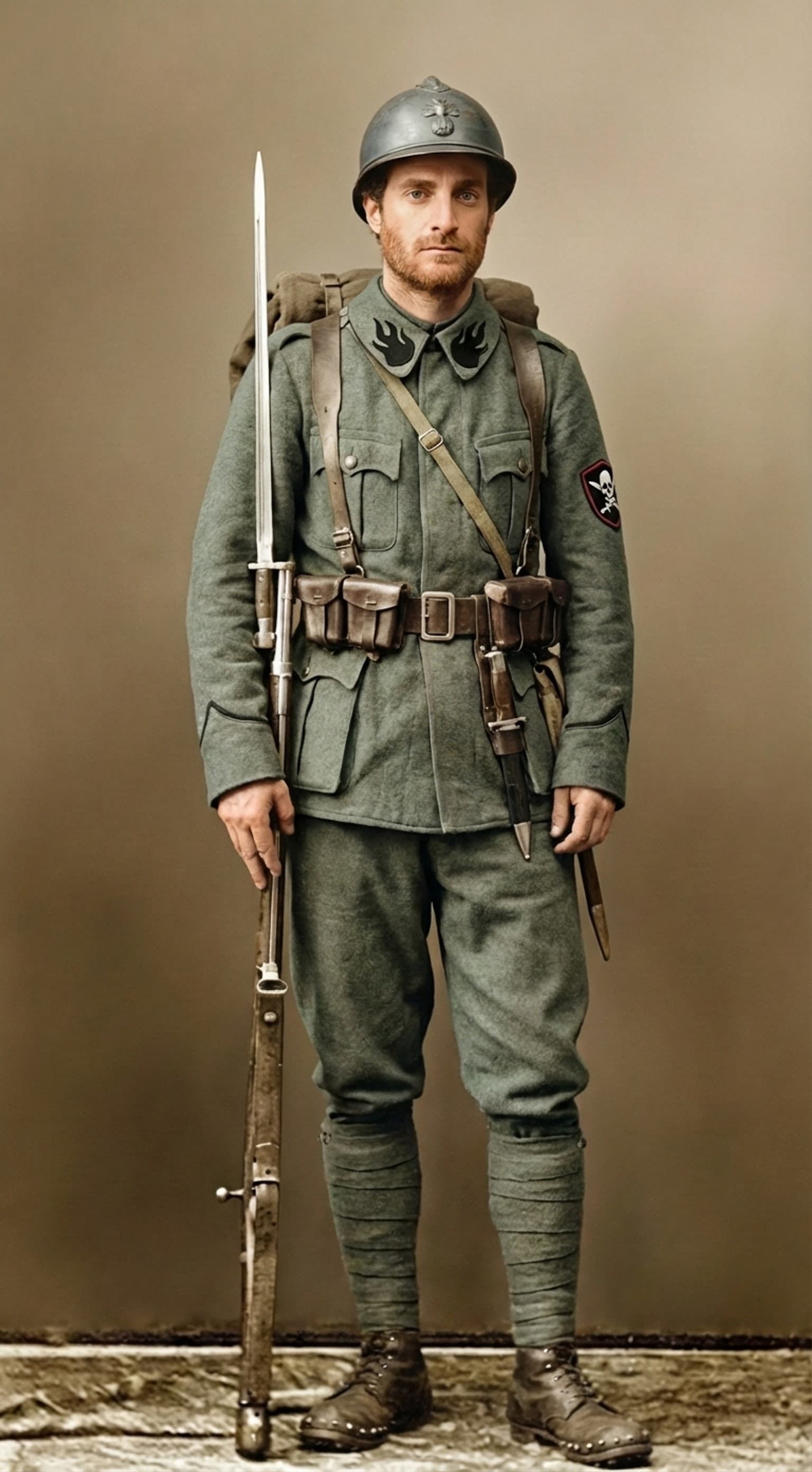
Uniform and equipment
| Uniform | Dark green-grey tunic and breeches, puttees, black fez or helmet |
|---|---|
| Dress uniform | Smart dark tunic with black fezzes, distinctive collar patches |
| Headgear | Black fez with flame badge or steel helmet with insignia |
| Equipment | Daggers, grenades, Carcano carbine, sometimes submachine guns |
| Insignia and standard | Dagger with oak/laurel leaves |
Service record
| First appeared | 1917 |
|---|---|
| Peak strength | ~18,000 men |
| Recruited from | Fearless Volunteers / Criminals |
| Primary tactic | Grenade and Dagger Assault |
| Signature engagement | Battle of the Piave River (1918) |
| Motto or battle cry | O la vittoria, o tutti accoppati! (Victory or death) |
| Obsolescence | End of WWI / Rise of Fascism |
Timeline
- 1917: Formation of the Reparti d'Assalto. Colonel Giuseppe Bassi establishes the first experimental assault school at Sdricca di Manzano, formalizing the training of the Arditi.
- 1917: Baptism of Fire. Arditi units see their first major combat during the Battle of Caporetto, serving as the only reliable force during the retreat.
- 1918: The Legend of the Piave. During the Battle of the Solstice, the Arditi earn their reputation as the 'Caimans of the Piave' for their amphibious assaults.
- 1918: Victory at Vittorio Veneto. The Arditi spearhead the final offensive that knocks Austria-Hungary out of the war.
- 1920: Official Disbandment. Deemed too politically dangerous and irregular for peacetime, the Royal Army disbands the units, though their legacy fractures into political paramilitaries.
Battles
Battle of Caporetto
Amidst a catastrophic Italian collapse, the newly formed Arditi units fought ferocious rearguard actions. They sacrificed themselves to delay the Austro-German advance, proving their elite status even in the face of overwhelming disaster.
Battle of the Solstice (Col Moschin)
The defining moment of the corps. The IX Assault Unit stormed Col Moschin, seizing the key peak from the Austrians in a violent ten-minute raid. This victory halted the enemy advance and became the spiritual birthday of Italian special forces.
Battle of Vittorio Veneto
The final offensive. Arditi swim-teams crossed the Piave river with knives in their teeth to neutralize enemy machine guns, establishing the bridgeheads that allowed the main Italian army to shatter the Austro-Hungarian Empire.
Commanders
Gabriele D'Annunzio
The poet-warrior and honorary Ardito whose nationalist fervor and charisma embodied the unit's spirit. Though not a tactical commander of the corps, his leadership in the Fiume endeavor cemented the Arditi legend and aesthetic in the post-war Italian consciousness.
Giuseppe Bassi
The father of the Arditi. A visionary tactician who rejected the suicidal waves of standard infantry assaults. He forged the Arditi doctrine based on shock, speed, and the grenade-dagger combination, training his 'Daredevils' to look death in the eye with reckless bravery.
Tactics
The Grenade Barrage
Arditi did not use preparatory artillery. Instead, they crept close to enemy lines and unleashed a synchronized volley of Thevenot grenades to stun defenders seconds before impact.
Infiltration
Unlike line infantry, Arditi were trained to bypass strongpoints and flow through weak spots in the defense to attack command posts and artillery in the rear.
Caimani del Piave
Amphibious assault tactics involving swimming across rivers with daggers held in teeth to silently eliminate sentries and secure bridgeheads.