
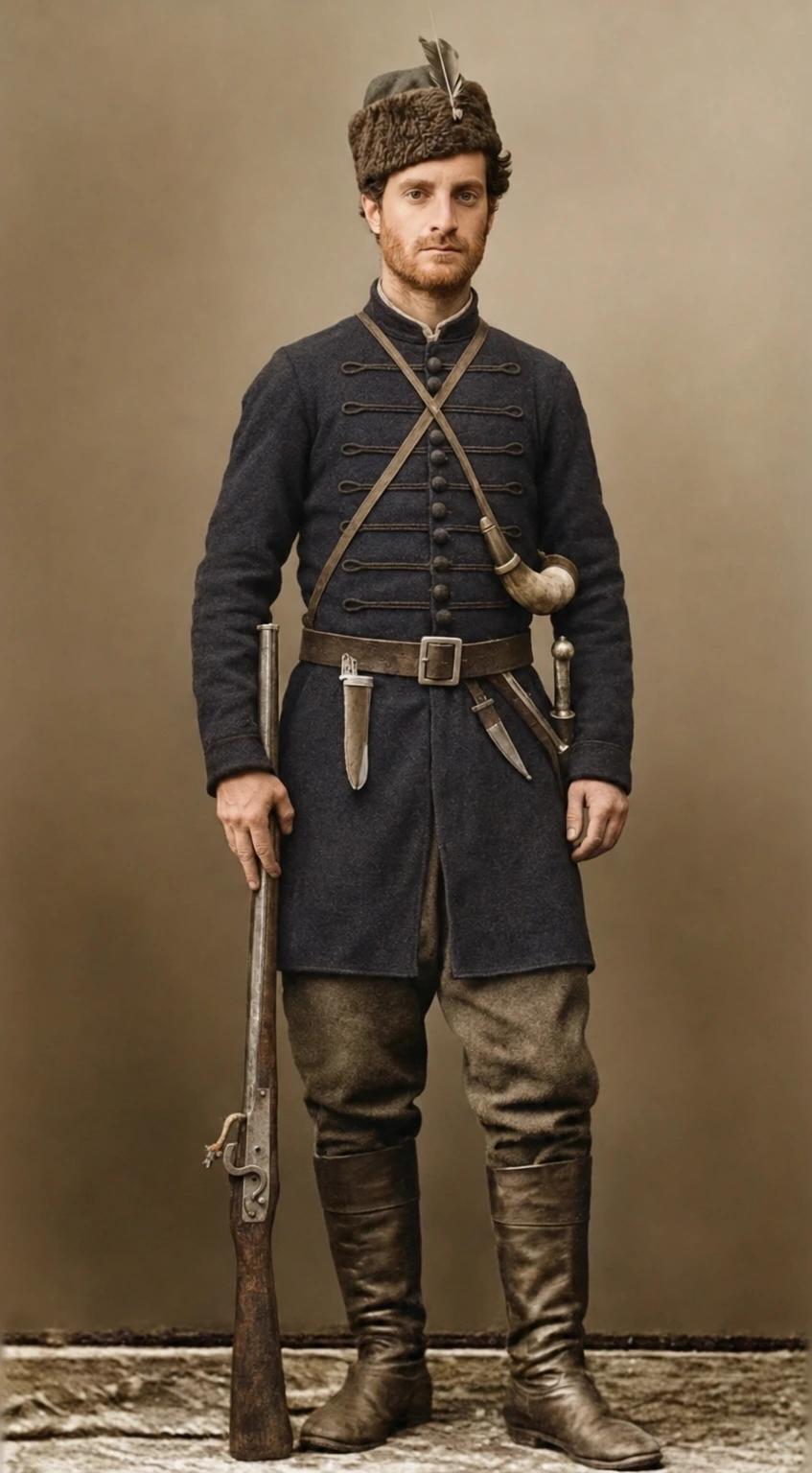
Uniform and equipment
| Uniform | Colorful dolman, fur-trimmed mente, baggy trousers |
|---|---|
| Dress uniform | Elaborate braiding, precious furs |
| Headgear | Fur kalpak or felt cap with feathers |
| Equipment | Fokos (axe), firearms, sabre |
| Insignia and standard | None |
Service record
| First appeared | 1500s |
|---|---|
| Peak strength | 20,000 men |
| Recruited from | Bandits / Displaced Peasants |
| Primary tactic | Guerilla Ambush |
| Signature engagement | Long Turkish War |
| Motto or battle cry | Liberty or Death |
| Obsolescence | Habsburg Regularization |
Timeline
- 1591: Militarization of Drovers. Armed cattle drovers (hajtó) begin coalescing into mercenary bands to protect herds from Ottoman raiders.
- 1593: Long Turkish War Begins. Habsburg and Transylvanian commanders hire thousands of Haiduks as cheap, expendable irregular infantry.
- 1604: Bocskai Uprising. Haiduks switch allegiance from the Habsburg Emperor to István Bocskai, turning the tide of the war in Hungary.
- 1605: The Korpona Charter. Bocskai settles 9,254 Haiduk warriors in specific towns, granting them collective nobility and tax exemption in exchange for military service.
- 1606: Treaty of Vienna. The uprising concludes, securing religious freedom for Hungary and legalizing the status of the Haiduk settlements.
Battles
Siege of Esztergom
During the Long Turkish War, Haiduk infantry proved essential in the trenches. While noble cavalry faltered, these rugged irregulars stormed the breaches, their ferocity in close-quarters combat contributing significantly to reclaiming the fortress from the Ottomans.
Battle of Álmosd
The defining moment where Bocskai's Haiduks ambushed and shattered the Imperial forces led by General Petz. Utilizing the cover of night and superior knowledge of the terrain, they forced the Austrians to flee, igniting the wider war for Hungarian independence.
Commanders
István Bocskai
Prince of Transylvania and the 'Moses of the Hungarians.' Originally an Imperial supporter, he turned against Habsburg tyranny, uniting the lawless Haiduks into a disciplined freedom-fighting force. He rewarded their loyalty with land and noble privileges, creating the Hajdú towns.
Gergely Némethy
A ferocious Haiduk captain who served as Bocskai's right hand. Known for his uncompromising brutality against Imperial forces and his ability to rally the disparate bands of marauders into a cohesive striking force during the Uprising.
Tactics
Marshland Ambush
Exploiting the treacherous bogs of the Alföld, Haiduks lured heavily armored Imperial troops into soft ground before slaughtering them.
Wolf-Pack Raiding
Small, autonomous units swarmed supply lines and isolated outposts, striking swiftly and vanishing before a counter-attack could form.
Wagon Fort Defense
Adopting Hussite tactics, they used circle formations of supply wagons to create temporary fortifications against cavalry.