
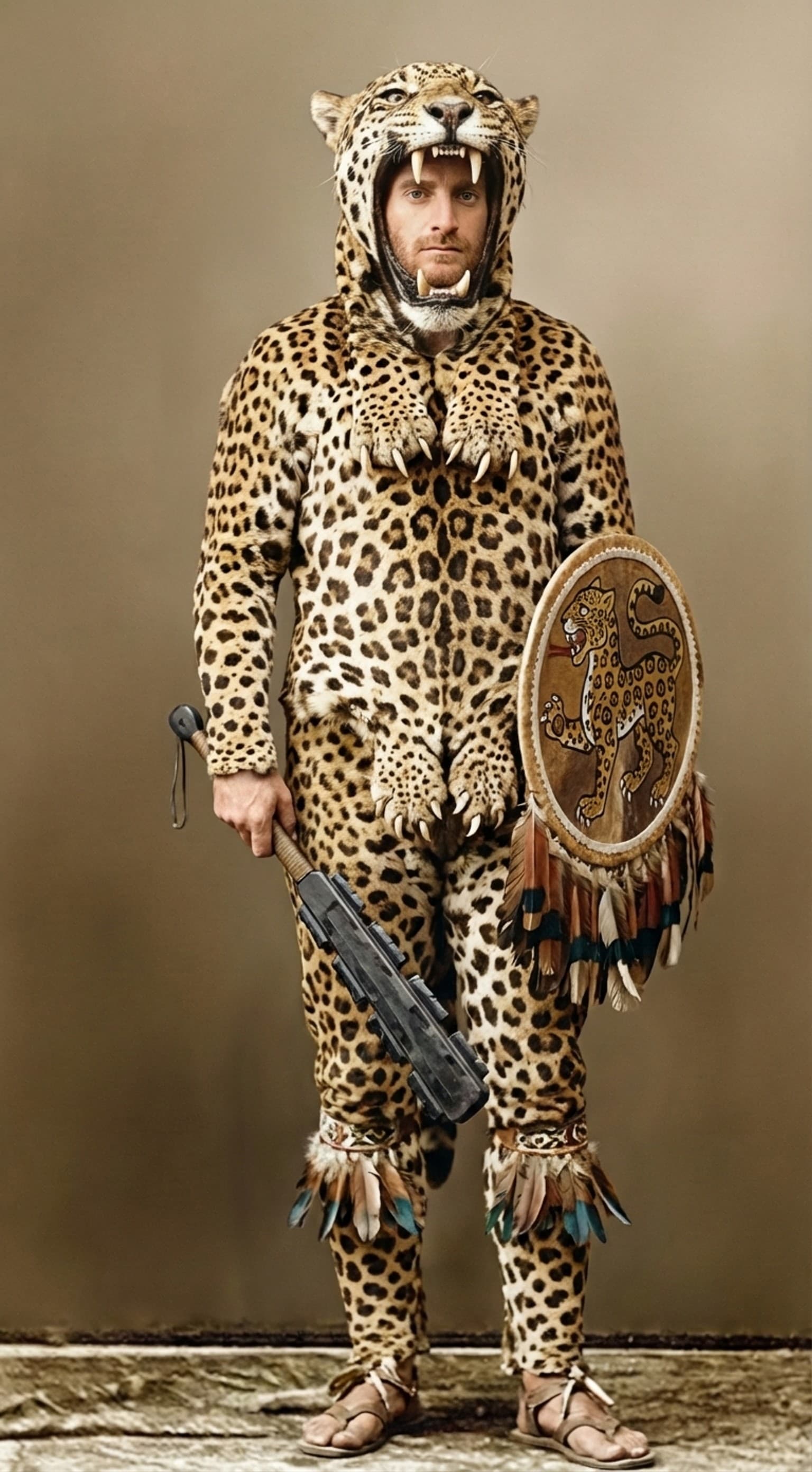
Uniform and equipment
| Uniform | Jaguar skin body suit, sandals |
|---|---|
| Dress uniform | Full jaguar skin with head as helmet, feathers |
| Headgear | Jaguar head helmet |
| Equipment | Macuahuitl (obsidian sword), shield (chimalli), atlatl |
| Insignia and standard | Full jaguar pelt suit with jaguar-head helmet |
Service record
| First appeared | 14th Century |
|---|---|
| Peak strength | Elite cadres |
| Recruited from | Commoners promoted for capturing enemies |
| Primary tactic | Capture for Sacrifice |
| Signature engagement | Battle of Otumba (1520) |
| Motto or battle cry | Atl Tlachinolli (Water and Fire) |
| Obsolescence | Spanish Conquest |
Timeline
- 1428: Formation of the Triple Alliance. The consolidation of power between Tenochtitlan, Texcoco, and Tlacopan creates the need for a standing professional military class.
- 1450: Institutionalization of Flower Wars. Ritualized conflicts (Xochiyaoyotl) are established, serving as the primary proving ground for warriors to capture prisoners and earn the rank of Jaguar.
- 1486: Reign of Ahuitzotl. Expansionist campaigns push the Jaguar Warriors into the tropical lowlands and Pacific coast, testing their logistics and adaptability.
- 1519: Arrival of Cortés. First contact with Spanish forces; Jaguar Warriors initially hesitate due to political indecision but soon engage in skirmishes.
- 1520: The Night of Sorrows. The Jaguar Warriors achieve their greatest tactical success, routing the Spanish from the capital.
- 1521: Fall of Tenochtitlan. The destruction of the Aztec capital and the effective disbandment of the Jaguar Warrior society.
Battles
La Noche Triste
In a torrential downpour, Jaguar Warriors led the assault on retreating Spanish forces. Using the cover of darkness and the narrow causeways, they inflicted massive casualties, drowning weighed-down conquistadors in the lake and capturing many for Huitzilopochtli.
Battle of Otumba
A desperate open-field engagement where the Aztec elite attempted to crush the wounded Spanish remnants. Despite overwhelming numbers, the Jaguar Warriors could not break the Spanish cavalry charges, and the death of the commander Cihuacoatl Matlatzincatzin caused a rout.
Siege of Tenochtitlan
The final stand of the Jaguar order. For months, they engaged in brutal urban warfare, ambushing brigantines from canoes and sacrificing captured Spaniards in full view of their comrades, before starvation and disease forced surrender.
Commanders
Cuitláhuac
A fierce warrior-prince and later Tlatoani, he orchestrated the devastating Aztec counter-attack during La Noche Triste. Unrelenting in his hostility toward the Spanish, he rallied the Jaguar and Eagle orders to purge the invaders from Tenochtitlan before succumbing to smallpox.
Cuauhtémoc
The last Aztec Emperor and a high-ranking warrior of the elite orders. He led the desperate defense of Tenochtitlan, organizing street-to-street fighting against superior Spanish technology. His capture marked the end of the Aztec Empire.
Tactics
Capture over Kill
Unlike European counterparts, the primary goal was to maim or grapple enemies to secure live captives for ritual sacrifice, requiring immense skill and risk.
Shock Assault
Clad in terrifying animal skins and screaming, they led the charge to break enemy morale instantly, often following a barrage of atlatl darts.
Feigned Retreat
A maneuver to draw disciplined enemy formations out of position, luring them into ambushes or uneven terrain where individual prowess dominated.