
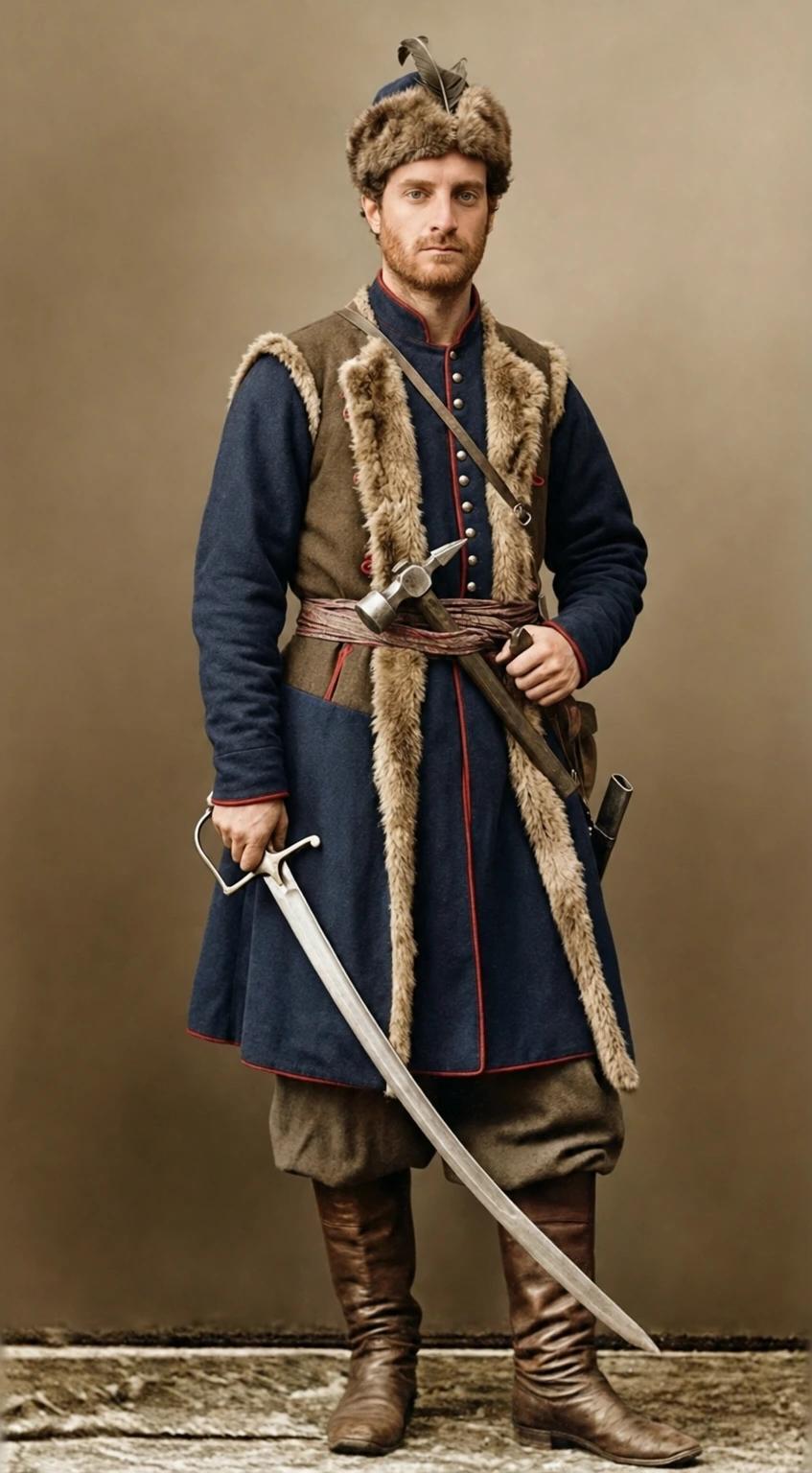
Uniform and equipment
| Uniform | Eastern-style clothing, animal pelts, colorful kontusz |
|---|---|
| Dress uniform | Leopard and wolf skins, silk sashes, tall fur caps |
| Headgear | Fur caps, turbans, or helmets with feathers |
| Equipment | Sabre, pistols, lance, bow |
| Insignia and standard | None (irregular brigands) |
Service record
| First appeared | 1600s |
|---|---|
| Peak strength | ~10,000 riders |
| Recruited from | Unpaid Mercenaries |
| Primary tactic | Terror Raid / Scorched Earth |
| Signature engagement | Battle of Humenné (1619) |
| Motto or battle cry | Jezus Maria (Jesus, Mary) |
| Obsolescence | Disbandment |
Timeline
- 1608: Origins in Rebellion. Aleksander Lisowski organizes a confederation of mutinous soldiers during the Zebrzydowski Rebellion.
- 1614: Formal Recognition. The unit is formally recognized as a volunteer light cavalry regiment for the Crown, operating without state pay (living off booty).
- 1616: Death of the Founder. Lisowski dies after falling from his horse; the unit retains his name and elects new leaders democratically.
- 1619: Savior of Vienna. The Lisowczycy defeat George Rákóczi at Humenné, altering the course of the Thirty Years' War.
- 1620: The German Scourge. The unit enters the Holy Roman Empire, terrorizing the Rhine region and earning a demonic reputation.
- 1624: Official Disbandment. Due to their uncontrollable looting and pillaging of friendly territory, the Sejm orders their dissolution.
- 1635: Final Echoes. Remnants of the unit are absorbed into standard formations or disperse, ending the era of the 'Elear'.
Battles
The Great Raid of Russia
A legendary deep-strike campaign where Lisowski circled Moscow, burning vast swathes of territory to distract Tsarist forces. They covered thousands of kilometers, defeating superior numbers through sheer mobility.
Battle of Humenné
The unit's magnum opus. Hired by the Habsburgs, they crushed the Transylvanian rear guard. This victory cut Bethlen Gábor's supply lines, forcing him to lift the siege of Vienna, effectively saving the Habsburg capital.
Battle of White Mountain
Serving as imperial mercenaries, the Lisowczycy harassed the Bohemian flanks. Their savage reputation alone demoralized the enemy infantry before the main charge even connected.
Battle of Chocim
Returning to defend the Commonwealth, they engaged in relentless skirmishes against Ottoman forces, bleeding the Turkish supply lines dry during the month-long siege.
Commanders
Stanisław Stroynowski
A ruthless commander who took the Lisowczycy into the heart of the Thirty Years' War. Known for his 'scorched earth' policies in the Holy Roman Empire, earning the unit the moniker 'Riders of the Apocalypse'.
Walenty Rogowski
The Colonel who led the 'Elear' to their greatest triumph at Humenné. Under his command, the unit executed a diversionary strike so devastating it forced the Transylvanian army to abandon the siege of Vienna.
Aleksander Józef Lisowski
A disgraced nobleman turned mercenary genius. He forged a brotherhood of outcasts into Europe's most feared light cavalry, answering to no one but the highest bidder or the King in dire need. His legacy was a unit that struck faster than rumor.
Tactics
Scorched Earth
Systematic burning of villages, crops, and bridges to deny resources to the enemy and create a psychological aura of terror.
The Swarm
Fighting in loose, non-linear formations to envelop enemy flanks and evade artillery fire, unlike the rigid ranks of Western cavalry.
Foraging War
Operating without supply lines by aggressively looting the local populace, allowing for incredible operational range and speed.
Hit-and-Run
Using light horses to strike vulnerable columns and retreat before heavy cavalry could counter-charge.