
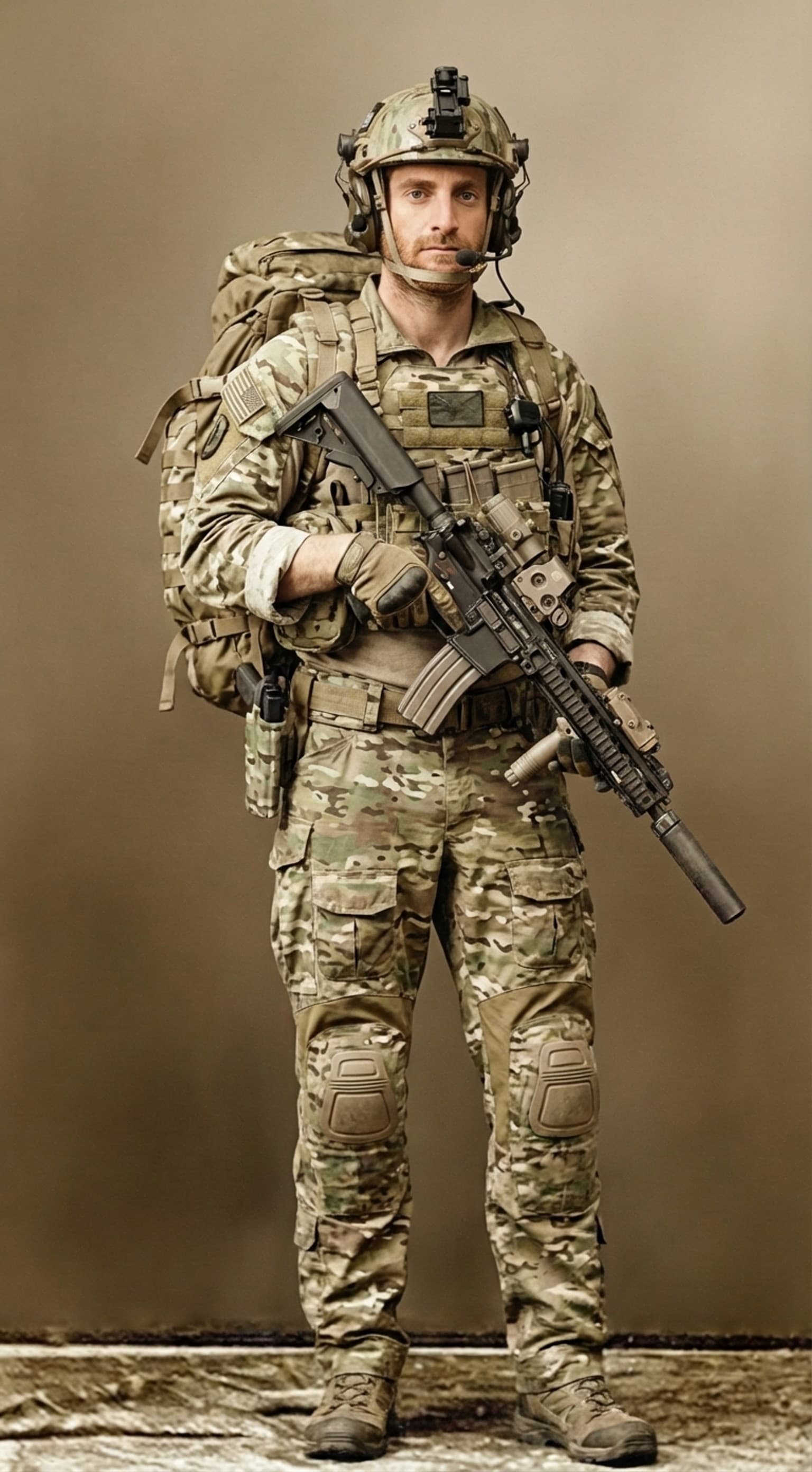
Uniform and equipment
| Uniform | Multicam |
|---|---|
| Dress uniform | Sand Beret |
| Headgear | Sand Beret |
| Equipment | M4, USP |
| Insignia and standard | Winged dagger 'Who Dares Wins' |
Service record
| First appeared | 1955 |
|---|---|
| Peak strength | Regiment |
| Recruited from | Selection |
| Primary tactic | Jungle / Mountain Ops |
| Signature engagement | Afghanistan (Hotel Intercontinental) |
| Motto or battle cry | Who Dares Wins |
| Obsolescence | N/A (Still Active) |
Timeline
- 1955: Formation. The NZSAS Squadron is raised for service in the Malayan Emergency, specializing in deep jungle tracking.
- 1965: Borneo Confrontation. Deployed to Borneo to counter Indonesian incursions, refining their 'shoot and scoot' jungle tactics.
- 1968: Vietnam Deployment. 4 Troop arrives in Vietnam, integrating with Australian forces for highly successful recon operations.
- 2001: Operation Enduring Freedom. NZSAS deploys to Afghanistan, shifting focus from jungle to high-altitude desert warfare.
- 2007: Victoria Cross Awarded. Willie Apiata receives the VC, bringing global recognition to the unit's quiet professionalism.
- 2011: Kabul Hotel Siege. High-profile response to a terrorist attack demonstrates the unit's elite urban counter-terrorism capabilities.
Battles
Phuoc Tuy Province Campaign
Operating alongside the Australian SASR, 4 Troop NZSAS conducted harrowing long-range patrols. Known as 'Grey Ghosts' by the enemy, they mastered the art of jungle ambushes, inflicting heavy casualties on the Viet Cong with zero fatalities to their own patrol.
Operation Burnham
A controversial yet tactically precise night raid targeting insurgent leaders responsible for attacks on Kiwi troops. Utilizing superior night-fighting capabilities and air support, the SAS dismantled the insurgent cell in the unforgiving Hindu Kush terrain.
Siege of the Intercontinental Hotel
When Taliban suicide bombers seized the hotel, NZSAS operators led the counter-assault. Fighting through smoke and darkness against entrenched fanatics, they cleared the building room-by-room, eliminating the terrorists and preventing a massacre of civilians.
Commanders
Major Frank Rennie
The founding father. Rennie forged the NZSAS in 1955 specifically for the suffocating jungles of Malaya. He established the grueling selection standards and the doctrine of elite self-reliance that transformed a small group of volunteers into one of the world's premier special forces units.
Corporal Willie Apiata, VC
A colossus of modern warfare. In 2004, under withering enemy fire in Afghanistan, Apiata carried a critically wounded comrade to safety across seventy meters of broken ground. He became the first recipient of the Victoria Cross for New Zealand since WWII, embodying the unit's quiet humility and ferocious courage.
Tactics
Deep Jungle Tracking
Born in Malaya, this involves reading the subtlest signs of human passage—broken twigs, displaced moss—to hunt insurgents in dense canopy.
High-Altitude Reconnaissance
Operating in small, self-sufficient teams at extreme altitudes in the Hindu Kush to gather intelligence and call in airstrikes.
Direct Action Raids
Surgical strikes, often conducted at night using helicopter insertion, to capture high-value targets or dismantle terror networks.